Below are a few (somewhat) brief $.02 opinions about books I've read or listened to recently but don't have the opportunity to review in full. Many of these titles I enjoyed as much or more than those that got the full court press. I hope you'll consider one or two for your own TBR stack if they strike your fancy whether they struck mine or not.
Tuesday, July 19, 2022
TWO-CENT TUESDAY
Wednesday, June 30, 2021
JUNE GEMS
These titles are two of my favorite of the year and each will sit with me long after this year is over. One is crime fiction at its finest, filled with social themes that don't beat you over the head but work with the non-stop plot to sink into your bones. The other is flat out one of the finest memoirs I've ever read.
A kickass plot filled with potential pitfalls, extraordinarily well carried out to avoid all of them. That's really all you need to know about Shawn Cosby's latest. I've read Cosby's other work (My Darkest Prayer and Blacktop Wasteland) and enjoyed both. Even more enjoyable is seeing a really good writer hone his craft before your eyes. Each outing is stronger than the last and I can't wait to see what follows Razorblade Tears, because it knocked my socks off.
Two fathers avenge the deaths of their sons. That's a good enough story. But add to that the fact that the sons were a mixed race couple with a daughter. Both had difficult relationships with their fathers who, surprise!, had some issues with their sexuality. One Black, one white, Ike and Buddy Lee have only checkered pasts, their sons, and a need for justice in common. When the police investigation goes cold, justice turns to personal revenge.
This story will translate beautifully to film. On the surface a fun, high-octane buddy story with two characters that feed off each other wonderfully. At its heart a well-painted picture of grief, regret, and social failings that lie so directly in the center of our society that they can separate families. If I had to find a quibble with this book, it's just a personal one -- my own weariness of the "family in peril" plotline. Yet Cosby also handles that well enough that I had to put my prejudice away.
Punch Me Up to the Gods, by Brian Broome
I did not know who Brian Broome was when this gorgeous little face and intriguing title captivated me. I will now never forget him, as this is certainly one of the finest memoirs to ever torture me. It's the story, like so many others, of the perils of being a young, poor, Black boy, queer to boot, and his efforts to find a place in the world. The search for a path made all the more treacherous by his father, who was an angry, violent man who would rather kill his son himself than have him killed by a white person.
While one can hate the methods, Broome does a stellar job of explaining the undercurrents of raising Black boys. This is where the memoir skyrockets from uber-talented writing to genius -- the format through which Broome tells his story along with that of our societal failings. He begins with one bus ride he shares with a toddler named Tuan and his father. One of the first things Broome observes is Tuan falling headfirst onto the concrete while waiting for the bus. Out of fright and/or pain, Tuan begins to wail. At which point his father tells him to stop crying and be a man. Thus begins the chapters titled The Initiation of Tuan.
Through these chapters, Broome observes ongoing interactions between Tuan and his father. Each chapter then feeds into Broome's own story and the way he learned those same lessons of hyper-masculinity. Through these alternating chapters, Broome tells his story and the story of young Tuan, both of which will empty your guts out like a rusted melon-baller. At turns hilarious and raw, Broome's ability and willingness to convey his innermost emotions are extraordinary.
Monday, May 3, 2021
EVERYTHING IS FINE :: Vince Granata
Saturday, May 1, 2021
LITTLE AND OFTEN :: Trent Preszler
Thursday, April 15, 2021
BROKEN HORSES :: Brandi Carlile
A version of this review previously appeared in Shelf Awareness and is republished here with permission.
Carlile's childhood in Washington State was marked by alcoholism, poverty, religion, health problems, instability (14 different homes) and, as the first-born grandchild, her own "inflated sense of self-importance and burden of perceived responsibility." That said, her family was warm, close, musical and filled with characters that lay a good storytelling foundation. But it is Carlile's sense of self and her ability to be deeply vulnerable and introspective before an audience that allow her to plumb the depths of her upbringing and forge her trail to center stage.
A brilliant lyricist, Carlile adapts her gift to the long form without missing a beat. Her style is conversational, whether the topic is music, charity work, motherhood (Carlile and her wife have two daughters), LGBTQ+ rights, Barack Obama or Carlile's beloved "gay pen pal father figure," Elton John. Overflowing with thoughtfulness, wicked humor, photographs and song lyrics, Broken Horses is an epic sit around the campfire.
Monday, March 22, 2021
THE BABYSITTER :: Liza Rodman
A version of this review previously appeared in Shelf Awareness and is republished here with permission.
When asked what she remembered about Tony, Rodman's mother calmly replied, "I remember he turned out to be a serial killer." A shocked Rodman attempted to confirm they were speaking about the same man and her mother clarified: "Oh, for Christ's sake... don't be so dramatic. He wasn't your babysitter.... He was the handyman." Particularly telling of Rodman's sorrowful childhood: "Yeah, so what.... He didn't kill you, did he?"
A half century after Costa brutally killed several young women (when 1960s free love and ubiquitous runaways made "disappearing" someone seemingly easy), Rodman teams up with author friend Jennifer Jordan for The Babysitter. A haunting account--part memoir, part investigative journalism--of Rodman's childhood and its chilling connection with the Cape Cod Killer, The Babysitter is the astounding story of a vulnerable young girl and the consolation she found with a man who preyed on women.
Tuesday, March 2, 2021
THE OFFICER'S DAUGHTER :: Elle Johnson
A version of this review previously appeared in Shelf Awareness and is republished here with permission.
Karen's father was a homicide detective, Johnson's father a parole officer. Not only was Johnson's life filled with lessons learned in law enforcement (which would later influence her writing on such shows as Law & Order and Bosch), but on the night Karen was killed, the author overheard her father, uncle and numerous officers discussing tracking down and killing Karen's murderers. In a tale that begins as a tribute to Karen, Johnson traces her soul-searching, reflecting on the violence and control that pervaded her immediate family.
Johnson writes exquisitely about the conflicting yearnings of punishment and forgiveness as she considers each of the men convicted for Karen's murder. Yet the contemplation of her complex father is the beating heart at the center of this soulful and aptly titled remembrance.
Tuesday, February 2, 2021
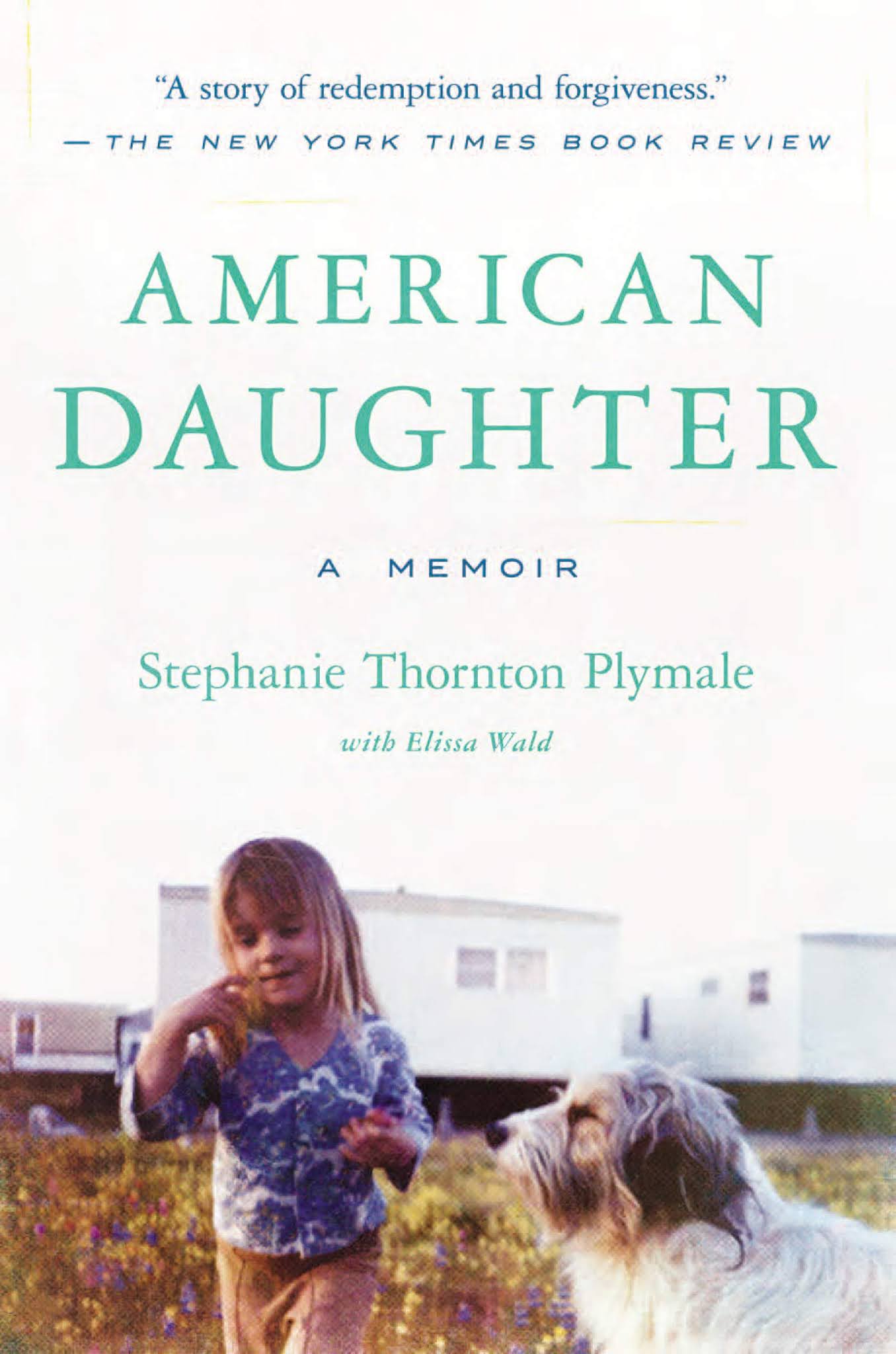
AMERICAN DAUGHTER :: Stephanie Thornton Plymale
A version of this review previously appeared in Shelf Awareness and is republished here with permission.
American Daughter opens in 1974, with Plymale and her four siblings (from various fathers in the "relentless succession" of men) living out of a station wagon in a California state park. While their mother works as a motel maid, they explore the beach "like a pack of stray puppies." When they have no food, the eldest, 10, harvests seaweed (their mother responds that seaweed is healthy and "People in the city paid top dollar for it!").
Staggeringly, these were some of the best years of Plymale's childhood. Though she wildly succeeded in leading a life the opposite of her mother's, she was haunted by memories. Decades later, Plymale receives a call from her mother (in violation of the stalking order filed after she threatened to burn down Plymale's house). She has stage-four lung cancer and six months to live. Plymale's recounting of this time with her mother, meshed with her memories, is as astonishing as it is disturbing. The writing is shatteringly candid but never overwrought, the story a stark reminder that "the most difficult people are often suffering in ways we can't fathom."
Friday, October 30, 2020
OUR LAST SEASON :: Harvey Araton
A version of this review previously appeared in Shelf Awareness and is republished here with permission.
Attending Knicks games was Musler's salve for life's difficulties, including raising five children as a single mother, even as she became a successful executive and rose through the ranks of major corporations. From her seats behind the Knicks' bench for more than four decades, she became one of the most well-known and vocal mainstays at the Garden, even straightening coach Jeff Van Gundy's tie before each game.
The Garden was where Araton and Musler's friendship took root, his seat on press row just a few feet from hers. She became "the steady voice of reason in [his] life, the proverbial wise elder, the trusted friend [he] could always count on." Our Last Season details their flourishing bond even as Michelle's health and the fan experience at the arena dwindled, with seats segregated and dedicated fans priced out. Araton writes with a reporter's pen and a friend's heart, providing great copy while making readers wish they had a Michelle Musler in their life.
Friday, September 11, 2020
LIKE CRAZY :: Dan Mathews
"As an atheist in southern Virginia...I do not believe in gods above and devils below, [but] I do honor the instinct inside that tells you the right thing to do. That's why I decided to buy a house and move in my ill, unhinged mother." Dan Mathews, a senior v-p at PETA and the unattached "happy-go-lucky homosexual" in his family, felt it his duty to take in his 78-year-old mother, Perry. The "deviant son was stuck with the crazy mother," like Norman Bates in Psycho, and Perry's final years would test their limits and cement their bond.
Perry had always been different. Her children previously chalked up her paranoid or delusional conduct to the tormented childhood she rarely talked about. Living together, Mathews senses things are seriously amiss. Their hilarious but often fraught-with-danger existence shatters when Perry seems to break, and Mathews frantically tries to get her help in a system not known for its user-friendliness or navigational ease.
In Like Crazy, Mathews (Committed) memorializes his mother's life with the bawdy and raucous tale of their relationship and the merry band of misfits they attract. Side-splitting laughter turns deadly serious as things take a horrific turn, but Mathews is a force to be reckoned with and the final descent is endearingly lovely. Mathews is so funny (lamenting he can't set his mother adrift on an ice floe, "another tradition ruined by global warming") it's easy to overlook his storytelling talents until things get gritty and humor is stripped away. Like Crazy is an utter gem.
I have not laughed this hard in...I can't remember when. This was definitely the book I needed in times of little to laugh about.
Monday, July 20, 2020
THE HEART AND OTHER MONSTERS :: Rose Andersen
What essayist and short fiction writer Rose Andersen knows about her sister Sarah's death is this: "She died of an overdose in her bathroom. She was dead for four days before her body was found. Her dog spent those four days trying to claw and bite his way through the bathroom door.... The police thought she had accidentally OD'd." What Andersen believes began surfacing through rumors shortly after Sarah's death: the overdose wasn't accidental; Sarah was a "loose end" that required tying up.
In her poignant and distressing memoir, The Heart and Other Monsters, Andersen recounts her Herculean efforts to "resurrect" her sister via diaries, e-mail hacking, newspaper clippings, record reviews and raw reflection on a shared family history replete with suicide, betrayal, addiction and abuse. Their father was, among other detrimental things, emotionally abusive (calling Sarah "Piggy" and both girls "fat and lazy"), helping drive each to self-harm only Rose would overcome. Sarah "wanted a father, even if that father was a drunk or mean.... She wanted to be loved."
As Andersen relays their excruciating paths, parallel yet divergent, she begins to merge facts about violent men, murders and dismemberment in "Small Town," ultimately tangentially connecting them to her sister. Written as though there is blood and heroin in her pen, Andersen blames herself for not saving her sister from the "great shadowy monsters." The Heart and Other Monsters is a biography, cautionary tale and murder mystery, masterfully blended with a memoir burdened by grief and guilt for crimes committed by others.
STREET SENSE: These days it doesn't take much for me to want to punch someone, but what these girls went through is so agonizingly maddening I felt myself tense up just reading it. Andersen's memoir is part murder mystery/investigation and part recounting of the family dynamics that can often doom our children to self-harm. It's very well done and one of the best memoirs I've read this year.
COVER NERD SAYS: Something about this cover drew me. It's not pretty. It's actually kind of ugly despite the pink palette. If the pink scribble on the photo wasn't there, this would be an entirely different cover. As horrible as that scribble is, it's all-important to the theme and what lies inside. I think this is a really great, horrible cover. Well done.
Sunday, July 19, 2020
MIRACLE COUNTRY :: Kendra Atleework
Atleework's writing about the denizens of her area is beautiful in its honesty and grit.
To understand the place we call the Eastern Sierra, you must be able to see what is no longer here. See what hides, change your definition of big and empty and small, of good and bad. Bend and search the desert floor for the near-invisible petals of a crowned muilla and then look up to mountains that seem to rise forever. This dusty margin of California draws and then replicates the kind of people who have never completely adjusted to a human scale. They don’t quite fit other places, be it the orbit of their ideas, good and bad, or the size of the sky they require in order to carry out their lives.
Her landscape writing, however, is dazzling. Great landscape writing, in my opinion, is a very difficult thing to achieve. It takes a special voice, intimacy, caring (love or hate or a complex mixture of both). Atleework hits that recipe out of the park. She grew up in Swall Meadows, in the Owens Valley of the Eastern Sierra Nevada. Annual rainfall averages five inches. In drought years that can be closer to zero.
The wind is a major force in the Eastern Sierra, earning the moniker of "Sierra Wave," and Atleework's writing about it is sublime:
On the beaches of the Pacific, gusts arrive laden with salt spray, whooshing with enough force to make your eyes water, a persistence perfect for launching kites. By the time that breeze reaches Owens Valley, it has raced over the coastal range, up the western, windward flank of the Sierra Nevada, and it has turned powerful. Dust devils tear up the dry surface of what was once Owens Lake, tossing toxic particles miles into the sky, into the lungs of the people who live near the old shoreline. The wind blows from the west over the mountains, and the willows along the river lean east. It scatters pollen in a golden film over backyard ponds. It stretches curtains across bedrooms.
I have hiked on a day when the Sierra Wave pummeled the sky, have leaned into a gale so strong it negates the work of gravity and I can almost lie down on air, can fall forward without really falling.
I have found myself caught in a canyon when the Jeffrey pines above me thrashed their branches like furious giants and the Wave hurled stones and pine cones and I ran for my car.
The Atleeworks were raised to thrive in their harsh environment, filled with scorpions, black widow spiders, rattlesnakes, cat-stealing coyotes, and mountain lions. They were "forever at the mercy of wildfires, blizzards, and gale-force winds. Above all, they were raised on unconditional love and delight in the natural world." The care and love of Atleework's unique and charismatic parents shines through in her work.
Her mother was diagnosed with an autoimmune disease when Atleework was six and died when she was 16. This loss wreaked havoc on Robert ("a man of wild plans and long shots") and his children, particularly adopted son Anthony ("pure cooked-down rage"). The family was damaged, Kendra taking off for school in Minnesota and Anthony tearing off with ill-conceived plans. Miracle Country recounts her pull home by her family as well as the landscape ("In Minnesota, the world is blanketed in snow silence. It’s safe to say: I miss familiar disaster. I miss water’s absence.")
In addition to landscape and family love and turmoil, Atleework swirls in some fascinating history of California, particularly with respect to water and the influence of William Mulholland, who became responsible for the infrastructure that pulled water away from the Sierras and allowed Los Angeles to become the city it is. The changes were not without war-waging. "'Whiskey’s for drinking. Water’s for fighting over.' This is a western adage I have heard many times. The contest over water passes between generations like a sodden torch. Bishop folks dam the shallow tributaries that pass through town, flooding their own yards and cutting off those below."
A memoir of love, loss, landscape and (to continue the alliteration) leaving, Miracle Country is a fascinating, heartfelt read that is astonishing in breadth without feeling bogged down. The advance praise will give you an even better push to pick up this gem:
Wednesday, July 8, 2020
THE POETRY OF STRANGERS :: Brian Sonia-Wallace
"Do you need a poem?" With this question, Brian Sonia-Wallace began his journey as the RENT Poet. Just "another unemployed millennial at the tail end of the financial crisis, looking for a purpose," he took a typewriter to a downtown Los Angeles street party and set up a folding chair and tray table with a sign: "POETRY STORE/ give me a topic/ I'll write you a poem/ pay me what you think it's worth."
When his first customer, a tough, tattooed, buzz-cut Chicana, softened before his eyes after reading his poem about her father, Sonia-Wallace was hooked. He "accidentally started a poetry business with a $20 garage sale typewriter and an impending sense of doom." Intending it as a performance art experiment slash practical joke, Sonia-Wallace proclaimed, "I'm going to pay my rent with poetry!" Since he was in despair and felt his life was over, why not do something stupid?
In The Poetry of Strangers, Sonia-Wallace shares how he not only paid his rent, but ended up with corporate jobs, Amtrak and Mall of America writer residencies, fundraisers, weddings and numerous other gigs. More interesting is that he'd never loved and doesn't consider his work poetry. It's about relationships, the "shrapnel interactions left behind, bits of other people" that left him less alone. While social connections were fraying, Sonia-Wallace traveled the country connecting with poetic empathy. "It was poetry that led [him] to discover a private America, an America where intimacy was possible, one person at a time."
STREET SENSE: This is an interesting one and I'm not entirely sure who to recommend it to. Not that anyone couldn't or wouldn't enjoy it, but it's an amorphous story. It's a memoir, but it's also about community, the state our country is in, our lack of expression, so many things. That is a positive and a negative, as it felt a little messy at times. Yet it's something of a messy story about messy life, and much of it was truly fascinating.
COVER NERD SAYS: I'm not sure what it is about this image that was unclear to me, but it feels off somehow. It's obvious the author is holding a typewriter, yet every time I look at it I think "Oh! That's a typewriter." Maybe because it's odd to see a typewriter in a scene such as that? Which is kind of the point. In any event, this completely fine cover didn't sit right with me. Maybe with the fonts it looks a bit...homemade? Maybe if it kept a faint blue sky instead of falling off into stark white? Maybe I'm just missing the message?
Tuesday, July 7, 2020
ROCKAWAY :: Diane Cardwell
Diane Cardwell grew up in a household where achievement reigned supreme, nothing short of perfection acceptable. Ninety-seven on a math test was met with one question from her father--"Why isn't it a hundred?" Unsurprisingly, she pushed herself to extremes to excel, becoming a reporter at the New York Times, marrying an equally driven man and setting out to create the perfect life. That blew up when her father died and a mid-life divorce caught her by surprise, seemingly sidelining her chances of having a child.
In Rockaway, Cardwell shares how she was saved from her longings for perfection by unlearning her father's lesson and facing failure over and over again by contesting a "liquid bully," the ocean. Watching a group of surfers from a bar in Montauk, she was dumbstruck, feeling as though she'd "stumbled upon a secret tribe of magical creatures." As she began dipping into the sport, taking lessons and renting a beach cottage, Cardwell was perpetually faced with her all too familiar fears of being pushed out of her comfort zone and not belonging.
What she ultimately found was that mastering the sport was not only impossible, but the least important part of her journey. Instead, the further she pushed herself, the more she discovered a life of meaning she never knew she wanted yet desperately needed. Rockaway is a thoughtful memoir of loss, self-discovery and what can happen when you hang on, literally and figuratively, to a piece of wood adrift in the sea.
STREET SENSE: Any book about surfing, for better or worse, has my attention. This time it was for the better. I loved Cardwell's story. Wanted to live much of Cardwell's story. Understood much of Cardwell's story. I think there are bits and pieces everyone can relate to in this one, surfer or not. We are not perfect beings. Don't let the perfect be the enemy of a life well lived.
COVER NERD SAYS: See "any book about surfing has my attention." On top of the surfing image, I love the wacky jet passing by, metaphor for whatever shit you want it to be a metaphor for. I'm not sure I understand the blue As in the title, if there is even meaning to them. I dig the colors and bands in the author identifier, though Cardwell's name is a touch lost with the yellow on orange. For me that didn't matter, as the surf image is what got me, but to others it might. In any event, a great cover I would have snatched off a table in an instant.
Wednesday, July 1, 2020
UNVARNISHED :: Eric Alperin
In Unvarnished, Eric Alperin shares how his life changed when he walked into Milk & Honey, a classic cocktail bar in New York City run by Sasha Petraske, who's credited with inventing modern cocktail culture. Alperin was an actor; after receiving his MFA but having no plan or money, he got his bartending diploma and became a "double threat." He eventually realized he had "every applicable neurosis" for bar work. People think he's a junkie, but he's really just a dyslexic who requires stimulation and organization, which he finds to the extreme behind the bar. The actor found the stage of a lifetime, a play that never stops.
Alperin fell hard, diving into all aspects of the trade. Alperin and Petraske eventually teamed up to open The Varnish in Los Angeles, hoping to create a port in a storm, to comfort and mend, celebrate and serve. A place locals and travelers alike thought of as home, gifted with the "intangible third rail of love."
Part memoir, part bar story and part captivating instructional, Unvarnished is a love story to the cocktail, its culture and those who foster it, Petraske in particular. Alperin's exquisite descriptions of bars, tool setups and mixing will have cocktail enthusiasts salivating. Newcomers will be eager to learn details they never imagined, such as the section on ice (the "bartender's flame," harvested from blocks in techniques dating back to 1800), that shows it's the little things that support a beautiful symphony.
STREET SENSE: As a novice cocktail nerd and block-carved clear ice maker, any book that discusses cocktail ice carving is ok with me. But the entirety of Alperin's story had me entranced. As a fellow OCD-er, just the descriptions of him setting out his tools gave me chills. So yeah, this was right in my weirdo wheelhouse, but if you are at all interested in cocktails, what it takes to run or open a bar, what makes good service and a good environment, the craft cocktail revolution (not the douchey one), or how one guy makes a success out of the weirdo tools he has, give this one a read. I loved it.
COVER NERD SAYS: So listen. I love a dude in shirtsleeves as much as the next person who is attracted to dudes. And this is a great bar shot. But the bar essential lover in me would have loved a cover concentrating more on the glass, booze, garnish, wood, all that great BAR STUFF. But I can't complain (all prior words to the contrary), this is a great, inviting cover.
Wednesday, May 13, 2020
THE GOLDEN FLEA :: Michael Rips
Michael Rips grew up viewing most objects as contaminated: "The antique was a cesspool, and flea markets its tributary." His wife's family enjoyed garage sales, and one weekend he was forced by the heat to leave the car where he was waiting. The poster he discovered at the sale began his transition from artifact abhorrer to dedicated denizen of the famed market in Manhattan's Chelsea neighborhood, the subject of his fascinating memoir, The Golden Flea.
To understand Rips's journey, one must understand the history and allure of "the flea." A staple in New York, the constellation of secondhand markets is among the best known, "widely regarded for the treasures to be found there." It rose from the vacuum left by the garment industry, which filled with the underground clubs, prostitutes, artists and junkies that flowed into the neighborhood in the '60s and beyond.
The flea was a meeting place for the various elements of Chelsea, where rare yet inexpensive items could be found to decorate apartments or provide inspiration, and people could display, create and re-create themselves. The colorful history of the neighborhood, the flea and the items sold there almost pale in comparison to the sellers, pickers and buyers that populate it. These people became part of the fabric of Rips's life, even as he needed to step away for a time due to more than a tinge of obsession. Discovering the flea through Rips's experience is magnificent, but the human influence on the transactions (Q: "Do you know what this is made of?" A: "It's made of get-the-fuck-out-of here.") give it true beauty.
STREET SENSE: This book is nutty in the best possible way and it makes me kick myself for not hitting this market while in New York. The wares sound crazily varied and fabulous (and sometimes fabulously bizarre), but the people and community make it spectacular. Some of the conversations in this memoir had me rolling. I know nothing about art or antiques other than what I like, so don't let you keep that away, that's not what this book is about. It's a look at the people, place and things that made New York City's Chelsea flea market one of the most famous (and outrageous) in the world.
COVER NERD SAYS: This cover attracted me despite my lack of art knowledge. I love the color and though I lack art sense I love frames. It made me curious. This is a hard book to describe through a cover, yet this did a pretty good job.
Thursday, March 5, 2020
SMACKED :: Eilene Zimmerman
Eilene Zimmerman was fooled. Not foolish--family and friends of countless addicts don't see the signs, or accept their more inoffensive explanations. How could a wildly successful, professional father of two fall prey to addiction? In her intensely raw memoir, Smacked, Zimmerman proceeds through her denial step by painful step, leading up to the morning she finds her ex-husband dead on his bathroom floor. Even then, her eyes don't take in the bloody hole in Peter's arm or the drug detritus strewn about his bedroom. It takes reviewing the pathology report and police scene photos for his hidden reality to smack her in the face.
Following the devastating discovery of Peter's body, Zimmerman goes back in time to their meeting, courtship, marriage and eventual divorce. The early details, initially feeling superfluous, eventually make sense as part and parcel of the warnings of and particulars behind Peter's deterioration. Zimmerman deftly paints the portrait of a complicated and tortured man, essential to understanding addicts as fellow flawed humans.
Zimmerman keeps herself and her children afloat through their grief and guilt by trying to understand how they could have been so "blind." She talks to other survivors, clinicians and white-collar addicts, delves into addiction and occupation studies, and sheds important light on the toxicity of the law, technology and other high-pressure careers. Professionals finding it increasingly easier to kill themselves (via drugs and/or suicide) rather than quit their jobs is a current societal trend Zimmerman lived through, investigated and shares bravely.
Wednesday, November 6, 2019
OUT LOUD :: Mark Morris
Mark Morris's Out Loud is a "memoir not a cookbook." He "can't tell you the recipe exactly," but is masterful at describing the ingredients that influence his career as one of the world's foremost choreographers. Morris's influences are many and complex. He asked to flamenco at nine and at 10 won a guest role with Bolshoi Ballet. He loves The Lawrence Welk Show, opera, country music and the traditions and religious mythologies of cultures worldwide. His talent took root at a young age--he improvised shows in his Seattle living room and listened to musical pieces over and over again to decode them.
Inspiration intertwined with Morris's humor (battle-strengthened by the "queer humiliation" of junior high), style ("old men's overcoats and a different rhinestone brooch" every day), brash defiance and sense of self to form the foundation of his multi-faceted style. He beautifully exhibits these traits in Out Loud, which feels like a Morris composition--movements within movements, fits and flows, taken together to form an entrancing and hilarious whole.
Unsurprisingly, Morris is a superb storyteller. In addition to his many professional accomplishments (Mark Morris Dance Group, White Oak Dance Project, numerous awards and honorary doctorates) and high-profile collaborators (Mikhail Baryshnikov, Yo-Yo Ma), Morris shares his private life, friendships, delightful family lore and laugh-out-loud asides (how a bidet formed "the fountainhead of [a] lifelong obsession with water features"). One need not comprehend dance to appreciate Morris's impact or be a devotee to give this work a standing ovation.
STREET SENSE: As someone who has never "gotten" dance, I was "subjected" to subscription tickets to Berkeley Repertory's dance performances for several years. There were actually plenty of performances I enjoyed, none more than Mark Morris's productions. His humor always came through and while I might not get dance, I get humor. I've always appreciated him and his take on things and this memoir was a joy to read.
COVER NERD SAYS: This cover is simply glorious and one of my favorites of the year.
Monday, November 4, 2019
I HOPE WE CHOOSE LOVE :: Kai Cheng Thom
"Deep down, I have always believed that I'm a bad person and that the world we live in is an awful place." The essays and poems in Kai Cheng Thom's I Hope We Choose Love forge a fiery path through the violence and negative messages the trans community simmers in. She seeks to find love--a lofty goal considering queer people, particularly queer women of color, are being murdered, dictated against and most often excluded by social norms, even within "Queerlandia." Thom's voice is one of power, her strength and ultimate hope punching through the tragedy, anger and crises of faith infusing these pieces.
Thom became "queer famous" in 2016 at age 25, when she published several works and entered the fray of social justice. She was stalked and threatened, and ultimately lost faith in her community and herself. In three parts, "Let Us Live," "Let Us Love" and "Let Us Believe," Thom calls out the fragmentation of identity politics and the "Oppression Olympics" (harsh competition for resources), asks her community to acknowledge its own culpability, and highlights the importance of family (noting, somewhat tongue-in-cheek, how babies are ruining everything).
Thom yearns for "gender euphoria," the state of finding joy rather than hatred in one's own gender presentation. The revolution starts at home and inside each of us. "What's an overachieving yet politically disenchanted, attachment-traumatized East Asian tranny who wants to survive and also be a decent person in the world supposed to do?" Thom writes unflinchingly, a marginalized voice of laudable might.
Thursday, October 24, 2019
THESE MEN AND THEIR FATHERS :: Don Waters
Robert Waters was part of the 1950s surfing crew on the Southern California coastline that spurred the sport after its arrival from Hawaii. Don Waters (Desert Gothic) learned this from belongings his father left behind when Robert abandoned him. In 2010, Waters wrote about surfing history for Outside magazine, hoping to confront his feelings about his father. Armed with "a paper-clipped copy of his [father's] unpublished autobiography, as well as a small plastic baggie of his ashes," Waters headed for Manhattan Beach, California, and his father's past.
These Boys and Their Fathers is a son's lyrical and sorrowful memoir of lifelong efforts to deal with the emptiness and fury connected to his father. When building a custom surfboard with legend Greg Noll (who made Robert's first board) didn't create the expected touchstone, Waters's quest took a fascinating turn--he discovered another writer who shared his name. The other Don Waters, a prolific pulp author starting in the 1920s, lived aboard a sailboat with his family, doting on his daughter, and became yet another older man Waters collected as a father figure to emulate and admire.
His decades of researching the lives of Robert and the other Don Waters provided the basis the author needed to complete the memoir he'd given up on three times. After 20 years seeking clarity by writing stories about faulty fictional men, Waters found it in complicated real men, his very human father and his historically tight-lipped mother. These Boys is a powerfully candid story of discovering "closure" through accepting and living alongside the pain and truth.
STREET SENSE: Surfing fans will love the board-building details and surf history Waters recounts. His father and the other Don Waters are fascinating and flawed men, and the author's road to peace is an interesting and curious one, impacted by his own impending fatherhood.
A FAVORITE PASSAGE: This same photo was part of my childhood landscape, only I remember it differently because my father was scissored out. There were other photographs like this one, each visited by scissors, each bearing a ghostly, uneven outline. In Mom's photo albums my father was gone, cut out, vanished. Everything was gone but his hand. Mom would have had to cut part of my tiny body from the picture to remove his hand. So there was his hand. The only image I had of him him was a hand. For seventeen years, a hand.
COVER NERD SAYS: Surfing and waves, I dig it. I like the colors and the images. It doesn't tell me a lot about what's inside, but the title helps a little (though I also admittedly find it a tad confusing, since the other Don Waters, who is such a big part of the memoir, was focused on his daughter). But I would, no doubt, pick this up from a book store table or shelf, so it's a win.


.jpg)