Monday, May 3, 2021
EVERYTHING IS FINE :: Vince Granata
Saturday, April 10, 2021
RAFT OF STARS :: Andrew J. Graff
A version of this review previously appeared in Shelf Awareness and is republished here with permission.
At the local gas mart, Tiffany works the counter, staving off homelessness, bantering with the locals and trying to catch the attention of Sheriff Cal. Cal is new to town, up from Houston where his confrontation with a violent parolee made a fresh start necessary. After Fish shoots Bread's father to stop another beating, the boys pack supplies, leave a note for Teddy and run away to build a raft and live off the land. The life-battered locals join with Fish's stalwart mother, Miranda, in a frantic search for the boys in the Wisconsin wilderness.
As the pairs (Fish and Bread, Teddy and Cal, Tiffany and Miranda) converge at the perilous gorge rapids the boys don't know exist, they learn about themselves, each other and the things that are most important. Graff's nature writing is absorbing, and his characters generate a yearning to know them. Raft of Stars is a quest story full of heart and humor.
Tuesday, March 2, 2021
THE OFFICER'S DAUGHTER :: Elle Johnson
A version of this review previously appeared in Shelf Awareness and is republished here with permission.
Karen's father was a homicide detective, Johnson's father a parole officer. Not only was Johnson's life filled with lessons learned in law enforcement (which would later influence her writing on such shows as Law & Order and Bosch), but on the night Karen was killed, the author overheard her father, uncle and numerous officers discussing tracking down and killing Karen's murderers. In a tale that begins as a tribute to Karen, Johnson traces her soul-searching, reflecting on the violence and control that pervaded her immediate family.
Johnson writes exquisitely about the conflicting yearnings of punishment and forgiveness as she considers each of the men convicted for Karen's murder. Yet the contemplation of her complex father is the beating heart at the center of this soulful and aptly titled remembrance.
Tuesday, February 2, 2021
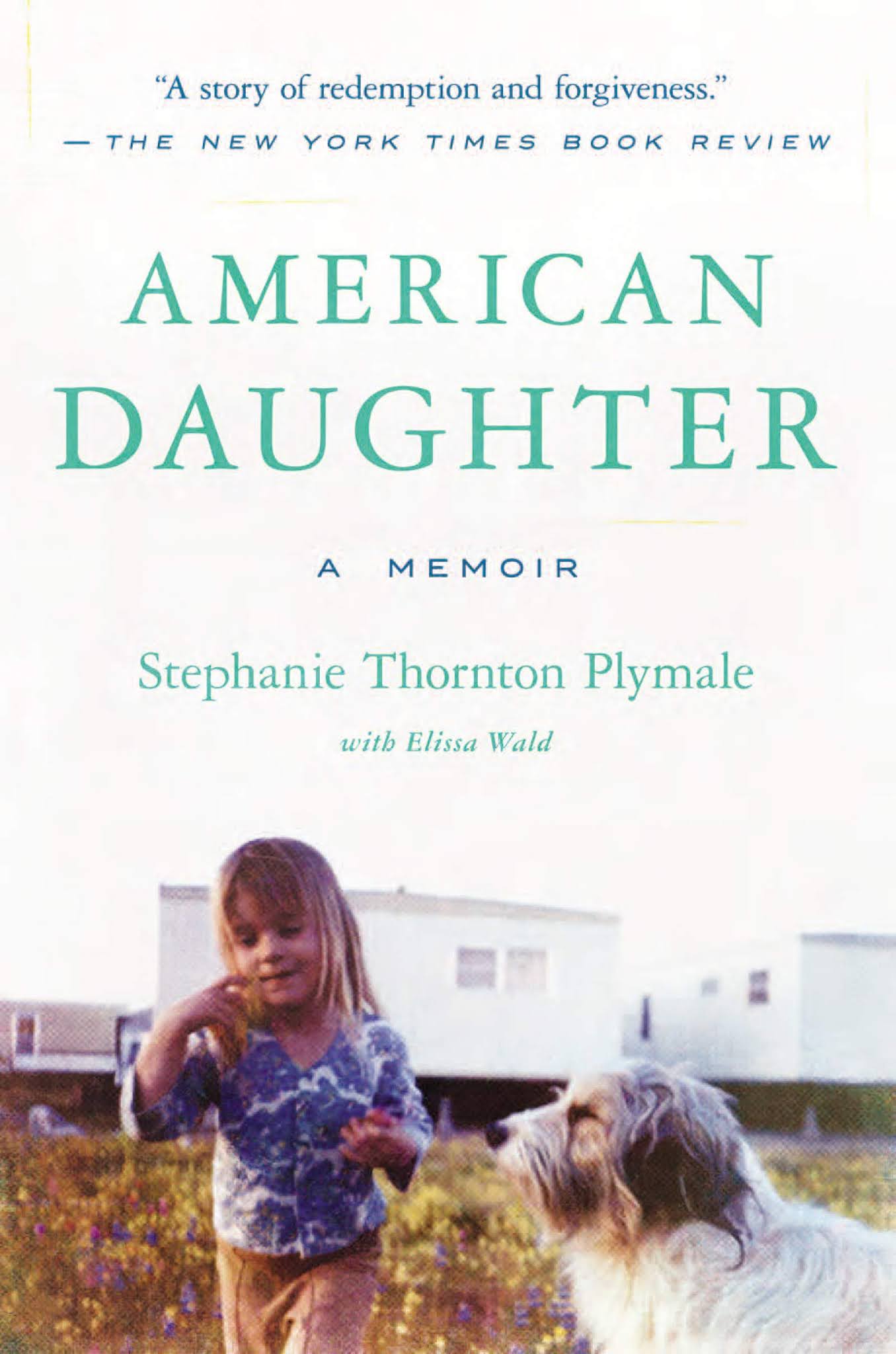
AMERICAN DAUGHTER :: Stephanie Thornton Plymale
A version of this review previously appeared in Shelf Awareness and is republished here with permission.
American Daughter opens in 1974, with Plymale and her four siblings (from various fathers in the "relentless succession" of men) living out of a station wagon in a California state park. While their mother works as a motel maid, they explore the beach "like a pack of stray puppies." When they have no food, the eldest, 10, harvests seaweed (their mother responds that seaweed is healthy and "People in the city paid top dollar for it!").
Staggeringly, these were some of the best years of Plymale's childhood. Though she wildly succeeded in leading a life the opposite of her mother's, she was haunted by memories. Decades later, Plymale receives a call from her mother (in violation of the stalking order filed after she threatened to burn down Plymale's house). She has stage-four lung cancer and six months to live. Plymale's recounting of this time with her mother, meshed with her memories, is as astonishing as it is disturbing. The writing is shatteringly candid but never overwrought, the story a stark reminder that "the most difficult people are often suffering in ways we can't fathom."
Sunday, July 19, 2020
MIRACLE COUNTRY :: Kendra Atleework
Atleework's writing about the denizens of her area is beautiful in its honesty and grit.
To understand the place we call the Eastern Sierra, you must be able to see what is no longer here. See what hides, change your definition of big and empty and small, of good and bad. Bend and search the desert floor for the near-invisible petals of a crowned muilla and then look up to mountains that seem to rise forever. This dusty margin of California draws and then replicates the kind of people who have never completely adjusted to a human scale. They don’t quite fit other places, be it the orbit of their ideas, good and bad, or the size of the sky they require in order to carry out their lives.
Her landscape writing, however, is dazzling. Great landscape writing, in my opinion, is a very difficult thing to achieve. It takes a special voice, intimacy, caring (love or hate or a complex mixture of both). Atleework hits that recipe out of the park. She grew up in Swall Meadows, in the Owens Valley of the Eastern Sierra Nevada. Annual rainfall averages five inches. In drought years that can be closer to zero.
The wind is a major force in the Eastern Sierra, earning the moniker of "Sierra Wave," and Atleework's writing about it is sublime:
On the beaches of the Pacific, gusts arrive laden with salt spray, whooshing with enough force to make your eyes water, a persistence perfect for launching kites. By the time that breeze reaches Owens Valley, it has raced over the coastal range, up the western, windward flank of the Sierra Nevada, and it has turned powerful. Dust devils tear up the dry surface of what was once Owens Lake, tossing toxic particles miles into the sky, into the lungs of the people who live near the old shoreline. The wind blows from the west over the mountains, and the willows along the river lean east. It scatters pollen in a golden film over backyard ponds. It stretches curtains across bedrooms.
I have hiked on a day when the Sierra Wave pummeled the sky, have leaned into a gale so strong it negates the work of gravity and I can almost lie down on air, can fall forward without really falling.
I have found myself caught in a canyon when the Jeffrey pines above me thrashed their branches like furious giants and the Wave hurled stones and pine cones and I ran for my car.
The Atleeworks were raised to thrive in their harsh environment, filled with scorpions, black widow spiders, rattlesnakes, cat-stealing coyotes, and mountain lions. They were "forever at the mercy of wildfires, blizzards, and gale-force winds. Above all, they were raised on unconditional love and delight in the natural world." The care and love of Atleework's unique and charismatic parents shines through in her work.
Her mother was diagnosed with an autoimmune disease when Atleework was six and died when she was 16. This loss wreaked havoc on Robert ("a man of wild plans and long shots") and his children, particularly adopted son Anthony ("pure cooked-down rage"). The family was damaged, Kendra taking off for school in Minnesota and Anthony tearing off with ill-conceived plans. Miracle Country recounts her pull home by her family as well as the landscape ("In Minnesota, the world is blanketed in snow silence. It’s safe to say: I miss familiar disaster. I miss water’s absence.")
In addition to landscape and family love and turmoil, Atleework swirls in some fascinating history of California, particularly with respect to water and the influence of William Mulholland, who became responsible for the infrastructure that pulled water away from the Sierras and allowed Los Angeles to become the city it is. The changes were not without war-waging. "'Whiskey’s for drinking. Water’s for fighting over.' This is a western adage I have heard many times. The contest over water passes between generations like a sodden torch. Bishop folks dam the shallow tributaries that pass through town, flooding their own yards and cutting off those below."
A memoir of love, loss, landscape and (to continue the alliteration) leaving, Miracle Country is a fascinating, heartfelt read that is astonishing in breadth without feeling bogged down. The advance praise will give you an even better push to pick up this gem:
Monday, September 10, 2018
FOLLOW THE SUN :: Edward J. Delaney
Edward J. Delaney's Follow the Sun opens with a funeral for a missing man, "reduced to objects. In lieu of a body, just left-behind things." Quinn Boyle had been "in hand-to-hand combat with Peace" since he was a kid; a lobsterman from the age of 17, "mud-footed in obligations he could not shed." Following years of addiction and a stint in prison, Quinn was clean and free, yet imprisoned by his history, responsibilities and the "daily grip of his work." One day, Quinn and his lone crewman, a longtime adversary, fail to return from the sea.Older brother Robbie is once again forced to take up Quinn's slack while trapped in his own morass of exes, part-time fatherhood and thankless work. Torn by survivor's guilt and the relief of Quinn's absence, Robbie's fragile peace is rocked by a report that his brother's crewman may be alive, sparking his need to investigate what happened on Quinn's last run.
Delaney (Broken Irish) writes with well-honed grit and artful description, be it the "obvious misery" of lobstering, withdrawal, or a daughter trying to know her father by using library books on handwriting analysis to study his birthday card notes. It is a very masculine perspective, the women tending toward henpecking support-seekers and foils, yet the men aren't painted pretty. Everyone seems smothered by the atmosphere and hard-knock life of a small fishing town with few available dreams or modes of escape. Delaney is wonderfully adept at working that atmosphere on his characters with compelling results.
STREET SENSE: This is one of those books where the atmosphere and/or characters may make you squirm, you might not like them much, but it just doesn't matter. The themes of family and responsibility are, if not recognizable in this specific form, generally universal, and Delaney explores them well.
A FAVORITE PASSAGE: We think we make an imprint in the world and then find out it's so small, as small as crab's feet at the edge of the ocean, washed away by each pulsing wave.
Eh, I liked this one, too, so what the hell, you get both:
Waiting on a boat isn't like waiting for a man to emerge from a prison, where the date is determined and the time must be passed with patience, but also with calculation. Waiting for a boat is like waiting for something to happen imminently, when it then does not...Waiting for a boat is different. It's a thousand false sightings and a rising anxiety in which you tell yourself you're overreacting. But then it turns out, sometimes, you're not.
COVER NERD SAYS: As an ocean nerd (and also, yet less of, a sailing nerd) along with a cover nerd, this one spoke to me. There's nothing supremely striking about it, no image or font that screams "Pick me!" It may miss an audience that interprets what's here as more seriously "maritime-ish" than this book is, an audience that would fall for the family drama. Then again, I suppose normal people (not me) read cover copy and will hopefully figure out this one IS more than its cover.
Tuesday, June 28, 2016
ALLIGATOR CANDY :: David Kushner
David Kushner is an award-winning journalist, having won the New York Press Club award for Best Feature Reporting. He's also contributing editor of Rolling Stone and a prolific writer whose work has appeared in The New Yorker, Vanity Fair, Wired, New York Times Magazine, New York, GQ, and Playboy. Kushner's work has also been included in The Best American Crime Reporting, The Best Music Writing, and The Columbia Journalism Review’s Best Business Writing anthologies.
Obviously no stranger to serious topics, Kushner has now mined the depths of his and his family's own painful and tragic past with a new memoir, Alligator Candy. The title refers to the treat four-year-old David asked older brother Jon to bring back from his bike ride through the woods to the nearby convenience store. That was the last time David saw Jon alive.
It is difficult enough, perhaps even impossible, for an adult mind to wrap around such a thing as the loss of a child to abduction and murder. But how is a little boy to understand and deal with it? How can parents survive the ordeal themselves while trying to guide their other children through it intact? Alligator Candy is the soul-baring and heartbreaking account of David's recollection and reexamination of Jon's disappearance and murder and the entire Kushner family's tragically-altered path through the future that resulted.
Growing up in the Florida suburbs, David and his older brothers Jon (11) and Andy (13) had what most other kids growing up in 1970s America had - freedom. "October 28, 1973 began like any other Sunday." By the end of that day, the lives of the Kushners would be forever changed as the family of five became one of four and two loving, smart, generous people were left to pick up their own pieces while at the same time try to keep life going for their two remaining boys.
Unless we've gone through it, and I hope you haven't, none of us knows what this looks like. What this feels like. How you make your way forward. Reading about how this one family waded their way through the morass was both an educational lesson in humanity and loss, and what felt like an intrusion into a sacred space where outsiders don't belong.
Alligator Candy is written through two lenses. The first is that of David Kushner the adult journalist, who pieces together the facts and circumstances surrounding his brother's disappearance and ultimate death thirty years after it happened, conducting interviews and reviewing police files relating to the crime. The other is David Kushner the son and brother, looking back at his four-year-old self, a lens of confusion and mystery. The Kushner family, a lovely family you can't help but fall in love with, particularly David's parents, couldn't talk about Jon or his murder ("It was too scary," his mother would relate years later), leaving each of them to struggle alone while trying to do their best for the others:
We were once a family in our own solar system, like any family, and then we were cast out of orbit, each of us drifting into our own time and space, occasionally feeling the gravity of one another's pull. I can see my mother coming into my room after another tantrum of mine and rubbing my back, singing a lullaby to comfort me. I don't see my father. I don't see Andy. And before long, my mother isn't there, and my room is silent and dark. Outside my room, there's a windowless hallway with a yellow shag carpet. My parents are in their room at one end. Andy is in his at the other. Jon's room is empty. The doors are shut.Why read this book, a story of violence, loss, destruction and pain? That's a good question, and one I ask myself when I read books such as this. I think part of it is a feeling of obligation to bear witness. Not just to the Kushner family, but to the world at large. To remember and give name to people who have been lost and have lost, even if we don't know them and will never meet them. To resist the urge to bury one's head in the sand and pretend there is no evil in the world. The other, and perhaps more important, is humanity. It's often easy to lose sight of the fact that people all around us are going through things we may know nothing about. A reminder to be kind, to be gentle, as best we can.
STREET SENSE: This is not an easy book to read from a subject matter perspective. It is sad and horrible and painful. But it is an easy book to read from a prose and story perspective. Kushner is a no-nonsense writer, but his writing is also quite beautiful and thoughtful. I recommend this book to anyone who has similar feelings as those I expressed in the paragraph above. It's very well done.
A FAVORITE PASSAGE: It was the early seventies. The Age of Aquarius had given way to the "Free to Be You and Me" generation. We were unbuckled and unrestrained, free from seat belts and helmets or meticulously organized playdates. Our parents let us climb over the seats of our smoke-filled station wagon, puffing on candy cigarettes and, on road trips, sleeping way in the back. When we had a stretch of hours to play, they let us put the free in free time, wandering off to learn and explore and find adventures. They shared our innocence. They hadn't learned to be afraid.
COVER NERD SAYS: I hadn't heard about this book when I saw the cover and it immediately drew me in. Even with the bright font colors and the simple image of the bike wheel, there was something dark about it that I can't even put my finger on. Perhaps that black background. I also like that there is nothing gratuitous or blatantly violent about the cover. The book includes evil, but it's not all about the evil. It's about good people struggling with the repercussions of evil. Whatever the reason this attracted me, it did its job well, and I appreciate this cover for its simplicity. Well done.
Tuesday, January 5, 2016
ONLY LOVE CAN BREAK YOUR HEART :: Ed Tarkington
Small-town Virginia 1977, a small enclave seemingly insulated from the general madness of the world. This is where narrator Richard "Rocky" Askew, almost eight, lives with his mother, father (the Old Man), and half-brother Paul, sixteen. Rocky, the "good kid," is "excessively governed and supervised,...imprisoned by his mother's anxieties" due to "what had become or appeared to be becoming of Paul."
By real world standards, Paul feels far from a bad kid, but in Spencerville, driving your Chevy Nova around town while smoking cigarettes, wearing your hair long, and listening to loud rock music is what constitutes a "bad kid" and that's how Paul is labeled. He starts out as a stellar big brother to Rocky, teaching Rocky about the greats of rock and roll and often letting him tag along with Paul and his girlfriend Leigh, daughter of a prominent local judge (none too happy about his top student-athlete daughter's relationship with a no-good like Paul Askew).
When left by the Old Man to bear a family burden alone, it's the last straw for Paul. Full of vengeance and misguided empathy, Paul undertakes a course of action that narrowly eludes disaster. The next day, Paul and Leigh run off, leaving devastation in their wake.
The lives of the Askews are also entwined with those of the Culvers, Brad and Jane, who live on the neighboring Twin Oaks property, a larger, historical parcel the Old Man was, in his mind, not good enough to buy when he tried. In the words of Rocky, "[the Culvers'] hands have been on every bad thing that's happened" to his family.
The troubled dynamic of the two families is set off on a new, fateful course when, eight years following the disappearance of Paul and Leigh, Rocky takes on work at the Culver stables, leading to a relationship with their daughter Patricia, many years Rocky's senior:
To the few people I've told about Patricia over the years, I have described her as a mysterious older woman who, through chance and circumstance, took me to bed and stole my innocence. To men, I would treat the whole experience as a naughty little conquest. To women, I would relate it as a dark secret that had marked me with a lingering, melancholy vulnerability. The truth was something more complicated.
The drama set up by Paul and Leigh's disappearance, Rocky and Patricia's "romance," and the Old Man's dealings with Brad Culver was palpable and I devoured and adored the first half of Only Love Can Break Your Heart. The characters and their relationships were engrossing and I was drawn into their world and issues very quickly; I simply didn't want to put the book down. My heart ached for Rocky, I felt for Paul but also wanted to smack him upside the head, same with the Old Man. The family dynamics were compelling, often sad, and always very human.
Tarkington's writing is beautiful and I flagged many passages throughout, but the second half of the story felt a bit loose and amorphous to me. A mystery is thrown into the last quarter and solved with a bit of a whimper, secondary characters appear and then seem to have trouble finding a place, and the crescendo really never crescendoed. I went from knowing I had to have a copy of Only Love for my shelf to the lesser but still positive vibe of being glad I'd found the book and this author. No doubt I will read Ed Tarkington's next offering.
STREET SENSE: Lovely and engaging writing, unique characters, and intriguing relationships and family dynamics highlight this tale of family, love, and tragedy. While the story flagged for me in the second half, I still recommend the book to those readers who aren't sticklers for a watertight plot over character and writing.
A FAVORITE PASSAGE: We must all recall the incomprehensible spite of the schoolyard bully: The random selectivity of his malice, the helpless acquiescence of his prey. Perhaps worse of all, the pathetic betrayal of the victim's so-called friends, who stand aside or perhaps even laugh and jeer, loyalty being a far less powerful instinct than self-preservation. Instead of forming a line of defense, they part and flee, like the herd of wildebeests on Mutual of Omaha's Wild Kingdom, blithely trotting away as the lion gorges on the the entrails of some unfortunate straggler while Marlin Perkins voices airy platitudes about the circle of life.
COVER NERD SAYS: By now it should come as no surprise that the cover of Only Love is what initially caught my eye while I was perusing the NetGalley shelves. I had not heard of the book or Ed Tarkington when I clicked to read the summary based solely on the cover image. The title and fonts gave me the feeling I might like what was inside. In fact, even though I'm not a huge fan of the font used for the author's name, it evoked something lighter and humorous that made me curious as to how those elements might co-exist. Strangely, this is the second 2016 title to switch covers on me. When I started reading, the cover didn't speak to me as much as it did when I first saw it. A quick Google search revealed the initial cover below, which I like much more than the blue one. I think the brown fits much better and the author font presents much better in black. Overall, well done.
.