Showing posts with label Nonfiction. Show all posts

Tuesday, August 10, 2021

TWO-CENT TUESDAY

Below are a few (somewhat) brief $.02 opinions about books I've read or listened to recently but don't have the opportunity to review in full. Many of these titles I enjoyed as much or more than those that got the full court press. I hope you'll consider one or two for your own TBR stack if they strike your fancy whether they struck mine or not.


FATAL FAMILY TIES, by S.C. Perkins

This third installment in the charmingest of the charming cozies is proof positive I'm a convert to the light side. Texas genealogist Lucy Lancaster's Flacos Tacos lunch is interrupted by her least favorite former co-workers. Camilla Braithwaite now needs a favor--a recent article accuses Camilla's ancestor Charles, a civil war corporal, of being a phony and a deserter rather than a hero, and Camilla wants Lucy’s help clearing his name. Of course, shenanigans ensue before Lucy can get to the bottom of the mystery. This series leaves me longing for more time with the recurring characters. Thankfully, we got some of Lucy's Grandfather and more of her delightful parents. That meant a little less of her office best friends and Neil Patrick Housecat, but their on-screen time is always fun. 


GUILTY ADMISSIONS, by Nicole LaPorte

A thoroughly researched and detailed account of the college admissions scandal that caught several big Hollywood names in its snare. I found the audio a great way to listen to the tale, and the meat of the story was fascinating. It started with a lot of background detail that seemed a tad superfluous, but overall I enjoyed this account of aholes aholing.


100 POEMS TO BREAK YOUR HEART, by Edward Hirsch

Edward Hirsch's Gabriel: A Poem was the work that got me started on a mission to read more poetry. It is a set of poems, longlisted for the 2014 National Book Award, about the life and death of Hirsch's son. When I saw Hirsch had collected this set of poems I was all in. Turns out it's much more than I bargained for. Not only does he lay out 100 poems, he analyzes them and assists in the reading and internalizing of them. Which means this collection is lovely, educational and lengthy. I'm still working my way through it in little snippets, but it came out some time ago and I didn't want to delay writing about it any further. A great place to start if you're trying to get more out of the poetry you read.

GOOD NEIGHBORS, by Sarah Langan

The premise had me really looking forward to this one, but it ended up a bummer. A picturesque neighborhood in suburban Long Island is thrown into chaos when the Queen Bee regrets telling one of the new, "misfit" neighbors a very personal secret. So she begins to sabotage the family. Which really makes no sense, but I went with it. As the Wildes are turned into outcasts and the tension builds, a sinkhole opens in the area. Not only does it keep widening without explanation, it sucks whatever gets close into its black hole, including the Queen Bee's daughter, leading to more accusations to...what end? I found the plot disconnected and a story written around issues and events the author wanted to address. I'm all for unlikable characters as I find them more interesting, but these left me cold. If I never read the word "bitumen" again I'll die happy.

FOOTBALL'S FEARLESS 
ACTIVISTS, by Mike Freeman

A fascinating and highly-recommended look at the story behind the protests of numerous Black athletes following the ongoing string of police killings of Black men, as well as the pushback they received from not only the fans but their own organizations and ownership. It's no secret 45 is shameful and to be honest I didn't expect much more from the NFL and I was still surprised by some of the reporting here. I'm glad there are athletes like these, who will risk it all for what's right. I did lose a little respect for the book when Barack Obama's name was misspelled twice. Once is a typo, twice is disrespectful. 

SHELTER, by Catherine Jinks

Jinks's The Shepherd blew me away last year and I was eagerly anticipating this title, which couldn't have been more different. Far from the sparse, cracking prose of the former, Shelter was told in a much more descriptive and "mainstream" hand. Which isn't bad, it was simply a much different experience. In Shelter, Meg lives alone in the bush outside town as a way to avoid her abusive ex. Knowing what it's like to try to escape that horrible situation, Meg agrees to provide shelter to Nerine and her two daughters. Of course all three are traumatized, but then odd things begin to happen. Not the least of which is Nerine asking Meg to get a gun (remember, this is Australia, where the people sensible about gun control live and this is no normal request or easy feat). Of course things spiral and questions come from all fronts, including Meg's past. Shelter is, if I have to label it, more domestic thriller than lean, gritty crime fiction. Thankfully, Jinks is a good enough writer to pull both off quite well. 


Tuesday, July 6, 2021

TWO-CENT TUESDAY

Below are a few somewhat brief $.02 opinions about books I've read or listened to recently but don't have the time, inclination, or opportunity to review in full. Their appearance often here has little to do with merit. Many of these titles I enjoyed as much or more than those that got the full court press. I hope you'll consider one or two for your own TBR stack if they strike your fancy whether they struck mine or not.

Although I generally try to slip some books in here that I wasn't too thrilled with, that isn't the case this week. Whether I read a physical copy or listened to an audiobook, each of these titles was a winner. Some were known authors I knew were unlikely to let me down, a couple were shots in the dark based on my gut that paid off tremendously. 

We Had a Little Real Estate Problem: The Unheralded Story of Native Americans & Comedy, by Kliph Nesteroff

I thought this would be an important, yet maddening, read. It was all that plus very well done and some great blasts from my past. It had me down a rabbit hole of old late night talk show clips (going back to Johnny Carson) to find old comedy bits. Look up Charlie Hill if you get the chance. He was the first Native American comedian to appear on The Tonight Show and also ended up writing for television. It is one of Hill's bits that inspired the title of the book: "My people are from Wisconsin. We used to be from New York. We had a little real estate problem.” 

Nesteroff has been called "The Human Encyclopedia of Comedy" and "The King of Comedy Lore," and after a bit of a slow-moving start, the material kicks up several notches when it hits "modern day" comedy (i.e., when my old ass was alive). A highlight of the impact Native Americans have made on the comedy world despite their historical denial of representation, this is a great (and sorrowful) read well-worth the time and education. 

 
What's Done in Darkness, by Laura McHugh

Since I fell in love with her debut, The Weight of Blood, McHugh has become a must-read author. Her latest continues her hot streak. In this one, 17-year-old Sarabeth's abduction is less than believable since she had been rebelling against her strictly religious parents when she was allegedly taken and then released a week later. Despite her torment, the abduction does give her the chance to finally escape the Ozarks.

Five years later, FBI Agent Nick Farrow calls, asking for Sarabeth's help. Another girl has gone missing under circumstances Farrow thinks may be related to Sarabeth's abduction and her memories may help the case. 

Reluctantly, Sarabeth agrees to help, and delving into her own kidnapping releases memories and a past full of evil just waiting to be uncovered. McHugh is a wonderful writer who tells a great story. When those two elements come together, an intriguing read results, even if one might not be into some of the plot arcs (i.e., religion). It really doesn't matter, I'll read anything McHugh writes. If you've not read her work, I highly recommend it.

Local Woman Missing, by Mary Kubica

Mary Kubica is another author who blew me away with her debut, The Good Girl. I've read everything she's written since and have only been slightly underwhelmed once. She remains an auto-read and when I hit her latest on audio my mind didn't wander at all (which it almost always does when I'm listening to a book while multi-tasking). 

Meredith, a doula, and her six-year-old daughter go missing. Meredith's car is found at a local motel, where it appears she committed suicide. Her daughter is nowhere to be found. The anxiousness in the neighborhood is amped up due to the recent disappearance of another local woman who turns out to have been one of Meredith's clients. 

Told in the usual rotating timeline, alternating POV that Kubica does so well, this one is well worth a listen despite some far-fetched plot points.


The Mighty Oak, by Jeff W. Bens

I was won over by a cool cover and a short plot summary and found a true gem inside. Tim "Oak" O'Connor is a goon for the El Paso Storm of the West Texas Hockey League. As a hockey hitman, he's paid to be violent and his body is basically jelly held together by a skin suit. He's also been away from home for a long time; long enough to lose his wife to his best friend and miss out on his daughter's life.

When he returns to Boston for his mother's death, he begins to confront all he's given up for a sport he still can't imagine giving up, even as he crunches oxy to keep upright. He also makes new connections with a haunted attorney and a young boy facing issues of his own. Bens writes wonderfully and The Mighty Oak had me entranced from the start. 


Wednesday, June 30, 2021

JUNE GEMS

These titles are two of my favorite of the year and each will sit with me long after this year is over. One is crime fiction at its finest, filled with social themes that don't beat you over the head but work with the non-stop plot to sink into your bones. The other is flat out one of the finest memoirs I've ever read.  


Razorblade Tears, by S.A. Cosby

A kickass plot filled with potential pitfalls, extraordinarily well carried out to avoid all of them. That's really all you need to know about Shawn Cosby's latest. I've read Cosby's other work (My Darkest Prayer and Blacktop Wasteland) and enjoyed both. Even more enjoyable is seeing a really good writer hone his craft before your eyes. Each outing is stronger than the last and I can't wait to see what follows Razorblade Tears, because it knocked my socks off. 


Two fathers avenge the deaths of their sons. That's a good enough story. But add to that the fact that the sons were a mixed race couple with a daughter. Both had difficult relationships with their fathers who, surprise!, had some issues with their sexuality. One Black, one white, Ike and Buddy Lee have only checkered pasts, their sons, and a need for justice in common. When the police investigation goes cold, justice turns to personal revenge. 


This story will translate beautifully to film. On the surface a fun, high-octane buddy story with two characters that feed off each other wonderfully. At its heart a well-painted picture of grief, regret, and social failings that lie so directly in the center of our society that they can separate families. If I had to find a quibble with this book, it's just a personal one -- my own weariness of the "family in peril" plotline. Yet Cosby also handles that well enough that I had to put my prejudice away.  


Punch Me Up to the Gods, by Brian Broome


I did not know who Brian Broome was when this gorgeous little face and intriguing title captivated me. I will now never forget him, as this is certainly one of the finest memoirs to ever torture me. It's the story, like so many others, of the perils of being a young, poor, Black boy, queer to boot, and his efforts to find a place in the world. The search for a path made all the more treacherous by his father, who was an angry, violent man who would rather kill his son himself than have him killed by a white person.


While one can hate the methods, Broome does a stellar job of explaining the undercurrents of raising Black boys. This is where the memoir skyrockets from uber-talented writing to genius -- the format through which Broome tells his story along with that of our societal failings. He begins with one bus ride he shares with a toddler named Tuan and his father. One of the first things Broome observes is Tuan falling headfirst onto the concrete while waiting for the bus. Out of fright and/or pain, Tuan begins to wail. At which point his father tells him to stop crying and be a man. Thus begins the chapters titled The Initiation of Tuan. 


Through these chapters, Broome observes ongoing interactions between Tuan and his father. Each chapter then feeds into Broome's own story and the way he learned those same lessons of hyper-masculinity. Through these alternating chapters, Broome tells his story and the story of young Tuan, both of which will empty your guts out like a rusted melon-baller. At turns hilarious and raw, Broome's ability and willingness to convey his innermost emotions are extraordinary. 


Thursday, June 24, 2021

SEEING SERENA :: Gerald Marzorati

A version of this review previously appeared in Shelf Awareness and is republished here with permission.


Gerald Marzorati, retired editor of the New York Times Magazine, takes an intriguing approach in Seeing Serena. The project was not formally authorized by Serena Williams, nor did Marzorati have special access to the athlete or her camp. Rather, Marzorati wanted "simply and not so simply, to see her in all the ways [he] could: watch her, describe her, listen to her, follow her (in the new conditions of seeing created by Instagram, etc.), interpret her, situate her." The result is a captivating look at one of the world's most supreme competitors and cultural symbols.


Upping the thrill factor is the timing of Marzorati's focus on Williams--37 and just back on tour in 2019 following the birth of her first child, she is nagged by injuries and playing opponents sometimes decades her junior. If that pressure isn't enough, she is seeking her 24th Grand Slam singles title, a pinnacle reached only by Australian Margaret Court during a vastly different era.


Far from the young novice who was booed and ostracized along with her older sister, Venus, when they joined the tour, Serena Williams is one of the highest paid and most recognizable athletes in the world, a crowd favorite. She's no less of a force off the court: she has forged her personal brand on social media while creating a fashion line and investing in other ventures as an entrepreneur. Interspersed with looks back, Marzorati provides an enthralling view of the forces that he believes made Serena "the most consequential athlete of her time." 


Saturday, May 1, 2021

LITTLE AND OFTEN :: Trent Preszler

A version of this review previously appeared in Shelf Awareness and is republished here with permission.

Trent Preszler, born and raised on a farm, longed to live in New York since watching The Muppets Take Manhattan in a 1986 Faith, S.Dak., theater. He made the dream a reality: he earned two degrees at Cornell and, then, as CEO of Bedell Cellars, created the merlot served at Barack Obama's inauguration. Yet his successes were haunted by his estranged father Leon's words, "You ain't never gonna be man enough." In Preszler's superb memoir, Little and Often, the improbable happens--the non-craftsman builds a canoe from scratch and makes peace with his demons. 

Disowned 14 years earlier, Preszler is stunned when his dad has nice words for him during a rare trip home. Leon dies shortly thereafter, oddly leaving Trent his toolbox. Recalling a fond memory of a time in a fishing boat, Preszler somewhat inadvisably decides to build a strip canoe, following directions from a decades-old paperback he discovers at the lumberyard.

The build begins about as well as expected as Preszler, whose friends think macramé might be more appropriate, rushes in and learns on the fly. But using his father's tools and discovering more about the churchgoing Vietnam veteran and championship rodeo rider helps Preszler understand his life's traumas. Readers learn along with Preszler as he works; he thoughtfully doles out historical details over the course of the boat's construction, as he reveals the family's background. Insightful and humorous, Preszler's memoir is a deep dive to find the father he longed for and the confidence to be his own man.

Friday, April 23, 2021

SPITE :: Simon McCarthy-Jones

A version of this review previously appeared in Shelf Awareness and has been republished here with permission.

A "strong" definition of the word spite, an act "where you harm another person and harm yourself in the process," does not leave much room for positivity. Yet the subtitle of Simon McCarthy-Jones's fascinating new work, Spite: The Upside of Your Dark Side, more than hints at how spite can be a constructive force. An associate professor of psychology and neuropsychology at Dublin's Trinity College, McCarthy-Jones has multiple degrees, papers and books to support his ideas about spite. That doesn't mean he declines the use of cinema's Terminator or Batman for occasional help explaining them.

Spite "runs deep," found in ancient myth and folklore, and most of us are familiar with its negative connotations. Yet if spite has no purpose since everyone loses, why was it not weeded out by natural selection long ago? McCarthy-Jones uses plain language, movies, humor and several economic "games" to "shine a light" on what he convincingly puts forth as an important tool for preventing injustice.

In the Ultimatum Game, player one is told player two in the room next door has $10 to share as they see fit. Player one can accept or reject player two's offer, but a rejection means both players get nothing. This seemingly simple game and its variations (the Dictator Game, the Joy of Destruction Game, etc.) are used ingeniously by McCarthy-Jones to explain both valid and improbable human behaviors, including voting against one's own best interests. Entertaining and illuminating, Spite explains how a society that depends on cooperation requires spite to thrive. 

Saturday, March 6, 2021

WE OWN THIS CITY :: Justin Fenton

A version of this review previously appeared in Shelf Awareness and is republished here with permission.


Justin Fenton, Pulitzer Prize-nominated crime and police accountability reporter for the Baltimore Sun, covered protests following Freddie Gray's 2015 death in police custody. Gray, a 25-year-old Black man, was arrested though he had committed no crime, and his murder was an indicator of a nauseating pattern of police malfeasance in Baltimore. We Own This City is Fenton's explosive recounting of years of cover-ups and lies by hard-charging officers handpicked to combat poor crime statistics by targeting violent repeat offenders. A blind eye was turned to these "knockers," whose expanded independence was abused in the most abhorrent of ways, further damaging an already drug-and-violence-weary city.


Authorities struggled to reduce violent crime, leading to desperation and breakdown of discipline that allowed officers to run amok. "The message from up on high was clear. Do whatever it took to stem the tide of violence. Whatever. It. Took." Some officers carried this edict to incredulous extremes, stopping and searching without justification, planting evidence, searching homes, and seizing money and drugs that they would then sell back into the community they were sworn to protect. Perhaps none were more egregious than Sergeant Wayne Jenkins.


Fenton zeroes in on hard-driver Jenkins and the Gun Trace Task Force, meticulously laying out the years they ran roughshod, garnering acclaim for results stemming from their own misdeeds. Tracking Jenkins's history and the FBI investigation into the GTTF, Fenton details the lives ruined and damage caused by both under- and over-policing of Black communities. For anyone who fails to understand why Freddie Gray ran, the Wayne Jenkinses of the world provide a life-or-death rationale. 

Tuesday, March 2, 2021

THE OFFICER'S DAUGHTER :: Elle Johnson

A version of this review previously appeared in Shelf Awareness and is republished here with permission.


"When I was sixteen, my sixteen-year-old cousin, Karen, had her face blown off at point-blank range by a sawed-off shotgun in a robbery gone awry at a local Burger King in the Bronx. It was early Saturday morning, April 4, 1981." Decades later, Elle Johnson still carries the wounds of her cousin's murder. Not until 2014, when her cousin Warren, Karen's older brother, asks Johnson to write a letter to the parole board encouraging them not to let the gunman free, does she truly begin to process the impact of her loss and upbringing. The result, The Officer's Daughter, is a memoir awash in doubt, anger and loss of innocence, told in the honed voice of a professional television writer and showrunner.


Karen's father was a homicide detective, Johnson's father a parole officer. Not only was Johnson's life filled with lessons learned in law enforcement (which would later influence her writing on such shows as Law & Order and Bosch), but on the night Karen was killed, the author overheard her father, uncle and numerous officers discussing tracking down and killing Karen's murderers. In a tale that begins as a tribute to Karen, Johnson traces her soul-searching, reflecting on the violence and control that pervaded her immediate family.


Johnson writes exquisitely about the conflicting yearnings of punishment and forgiveness as she considers each of the men convicted for Karen's murder. Yet the contemplation of her complex father is the beating heart at the center of this soulful and aptly titled remembrance. 

Tuesday, February 2, 2021

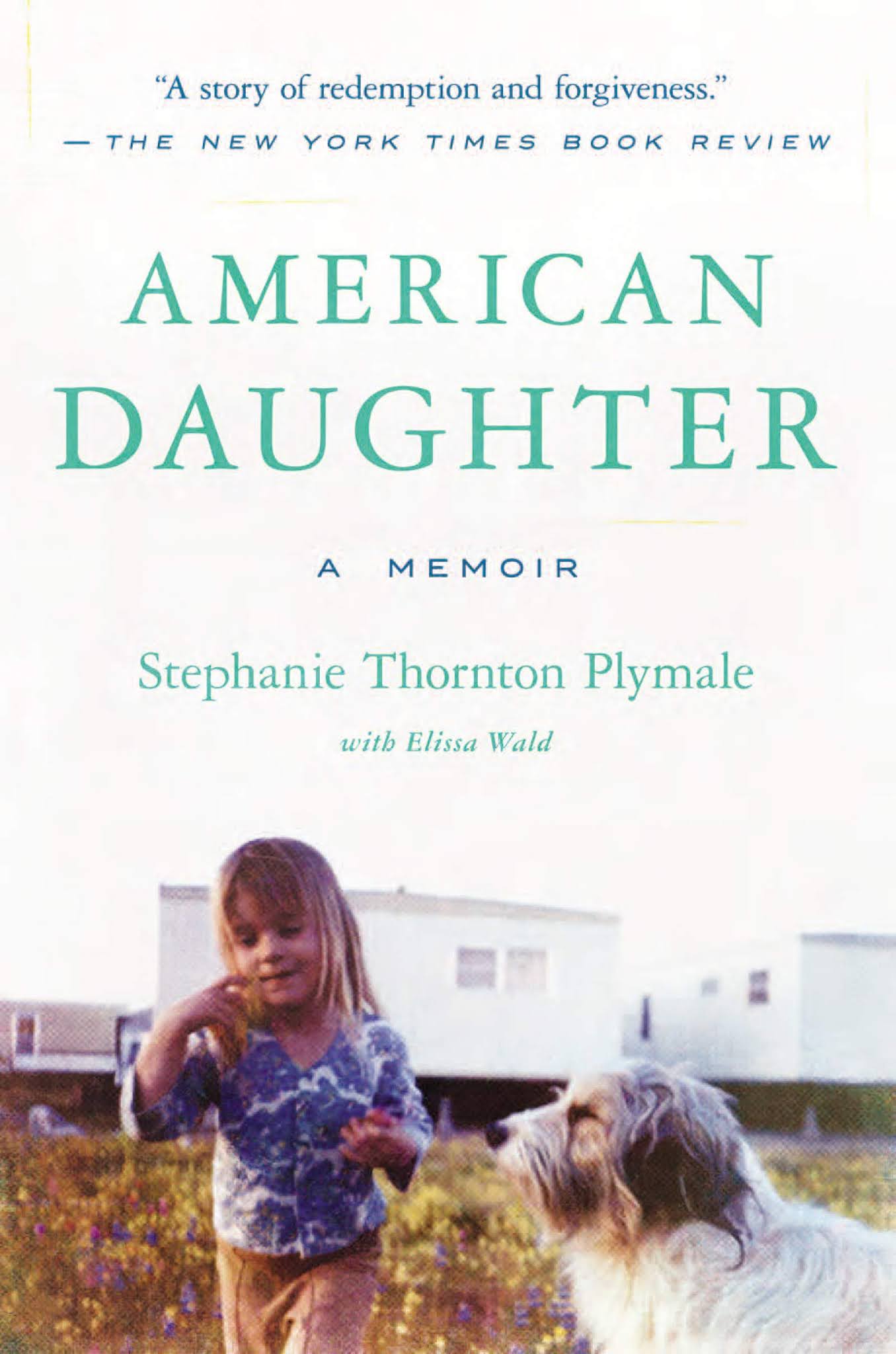
AMERICAN DAUGHTER :: Stephanie Thornton Plymale

 A version of this review previously appeared in Shelf Awareness and is republished here with permission.


Stephanie Thornton Plymale is the American dream. She has a long, loving marriage, wonderful children, a thriving design business and a position as CEO of the Heritage School of Interior Design. But her poignant and often distressing memoir, American Daughter, does not begin there. Plymale is also "an American nightmare," a child failed by every part of the American system and, most egregiously, by her mother.


American Daughter opens in 1974, with Plymale and her four siblings (from various fathers in the "relentless succession" of men) living out of a station wagon in a California state park. While their mother works as a motel maid, they explore the beach "like a pack of stray puppies." When they have no food, the eldest, 10, harvests seaweed (their mother responds that seaweed is healthy and "People in the city paid top dollar for it!").


Staggeringly, these were some of the best years of Plymale's childhood. Though she wildly succeeded in leading a life the opposite of her mother's, she was haunted by memories. Decades later, Plymale receives a call from her mother (in violation of the stalking order filed after she threatened to burn down Plymale's house). She has stage-four lung cancer and six months to live. Plymale's recounting of this time with her mother, meshed with her memories, is as astonishing as it is disturbing. The writing is shatteringly candid but never overwrought, the story a stark reminder that "the most difficult people are often suffering in ways we can't fathom." 

Thursday, December 31, 2020

THE TERROIR OF WHISKEY :: Rob Arnold

 A version of this review previously appeared in Shelf Awareness and is republished here with permission.


"Terroir" is a "somewhat controversial concept with an unsettled definition." It is essentially a French descriptor for how crop flavors are influenced by the environment (soil layers, topography, climate, etc.). As master distiller at Firestone & Robertson Distilling Co., maker of the TX Whiskey brand, Rob Arnold is spellbound by terroir. And Arnold himself is a study in terroir--almost all of his mother's side of the family worked in bourbon.


Arnold undertook a years-long process to educate himself about how environment affects product, ultimately writing a Ph.D. dissertation for Texas A&M's plant-breeding program on "how genetic and environmental forces influence corn-derived flavors in whiskey." In an industry that commonly uses co-op and commodity sales, TX Whiskey is one of a rising number of distillers sourcing grains from one farm to understand better environmental impact on flavor.


Arnold's thesis research forms the backbone of The Terroir of Whiskey, an in-depth look at crop growth, fermentation, distillation and aging of wine and whiskey. The wine industry--known for using terroir--was where Arnold began his immersive journey to show a correlation in whiskey. His world travel to wine and whiskey producers, discussions with makers, tastings, analyses and conclusions make for heady reading. Arnold smartly and capably writes for the distiller, educated taster and novice alike, breaking issues into lay language as necessary (even using Bugs Bunny, Daffy Duck and the Tasmanian Devil to explain). Arnold provides specifics for the reader to taste along with him, resulting in a full sensory educational experience. 

Tuesday, November 10, 2020

SHAKE STRAIN DONE :: J.M. Hirsch

A version of this review previously appeared in Shelf Awareness and is republished here with permission.


The art of craft cocktails requires knowledge, palate, imagination and aesthetic. While "mixology" sounds neat, an "ology" can make things feel daunting, and guides often leave home bartenders to wonder about mysterious ingredients. J.M. Hirsch, editorial director of Christopher Kimball's Milk Street, has come to the rescue. The practical concepts set out in Shake Strain Done help take the mystery out of mixology. Hirsch, a James Beard Award winner, works with common language so even a beginner can figure out if they might enjoy crème de violette before dropping $30 on a bottle. It's still about branching out and experimenting, but with concrete tools in one's bar apron.


Hirsch (High Flavor, Low Labor) breaks liquor into 12 sensory categories (fruity, sour, smoky, etc.) He then presents recipes in two easy-to-follow formats--through ingenious "cocktail cartography," based on its sensory category (with lovely illustrations by Lika Kvirikashvili) and by base alcohol. Each descriptor has its own chart, branching out into sub-categories. For example, if Manhattans are your bag, start on the "warm" chart. If the thought of warm and herbal floats your ice, head to the "herbal" branch to find the Sazerac, including a page reference for the recipe.  


Speaking of ice, Hirsch also breaks down the basics of bar tools, glassware and technique. His examples of shelf stocking present a basic home bar with the idea of making "great cocktails using as few bottles as possible." For stocking the bar bookshelf, Shake Strain Done is tough to beat. 

Friday, October 30, 2020

OUR LAST SEASON :: Harvey Araton

 A version of this review previously appeared in Shelf Awareness and is republished here with permission.


Harvey Araton was inducted into the Naismith Memorial Basketball Hall of Fame as a member of the print media for his distinguished coverage of the sport. In true form, he drove everyone around him crazy while trying to write his speech. Finally, his wife had two words of advice: "Call Michelle." In Our Last Season, Araton shares his years in sports media and covering the New York Knicks against the backdrop of his long, lovely and perhaps unlikely friendship with superfan Michelle Musler.  


Attending Knicks games was Musler's salve for life's difficulties, including raising five children as a single mother, even as she became a successful executive and rose through the ranks of major corporations. From her seats behind the Knicks' bench for more than four decades, she became one of the most well-known and vocal mainstays at the Garden, even straightening coach Jeff Van Gundy's tie before each game.


The Garden was where Araton and Musler's friendship took root, his seat on press row just a few feet from hers. She became "the steady voice of reason in [his] life, the proverbial wise elder, the trusted friend [he] could always count on." Our Last Season details their flourishing bond even as Michelle's health and the fan experience at the arena dwindled, with seats segregated and dedicated fans priced out. Araton writes with a reporter's pen and a friend's heart, providing great copy while making readers wish they had a Michelle Musler in their life. 

Tuesday, October 13, 2020

FREEMAN'S LOVE :: John Freeman

 A version of this review previously appeared in Shelf Awareness and is republished here with permission.


In Freeman's: Love, editor John Freeman tackles one of the weightiest, most amorphous subjects yet in this ongoing anthology series (Freeman's: California). Growing up, Freeman was blessed with unconditional love, living in its "constant, endless return." He grew to understand love could break him, endanger him or be used against him. As adults, we all wear love's lessons differently. "How we move our bodies is shaped by how love has entered our lives."


Freeman wanted to explore "the biggest and most complex emotion, the most powerful." Because "it cannot be held in the palm of our hand... we put it into the only container made stronger by such contradictions--a story." The container contributors are an impressive bunch, with varied backgrounds and numerous awards. Many of these pieces have been translated from, among others, Japanese, Bosnian and Polish.


Starting with seven short pieces, the anthology packs an emotional wallop from the start. Maaza Mengiste tells of a bracelet given by her grandmother, her "first definition of love and compassion," before Mengiste left East Africa for the U.S. Mengiste promises never to remove it as a symbol of their bond. She did not foresee a future where an Ethiopian woman in an airport refusing to break a vow could be viewed as a threat. From there, the likes of Anne Carson, Tommy Orange, Sandra Cisneros, Richard Russo and Louise Erdrich share how love uplifted, scarred and changed them. Although love is a universal language, its nuances are poignant and moving. 

Saturday, October 10, 2020

HONOUR :: Caroline Goode

 A version of this review previously appeared in Shelf Awareness and is republished here with permission.


"The date was 26 January 2006 and my life was just about to change." Caroline Goode found herself acting DCI of Team 16 of London's Metropolitan Police Force and Serious Crime Command by default. Determined to prove herself as a new and only female detective chief inspector, her first case started without even a body or crime scene.


Banaz Mahmod, an Iraqi Kurdish woman, was reported missing by her boyfriend Rahmat. They began seeing each other after Banaz left her arranged marriage. Goode was concerned from the jump. While adults go "missing" for all kinds of reasons, this case had obvious aggravating factors. Banaz's family insisted all was hunky-dory. But Banaz had repeatedly gone to the police for help. She reported being beaten and raped by her husband, that her uncle had threatened to kill her and that her father had attempted to kill her. She even prepared a list of those who wished her harm.


While more is known about honor killings now, the MPF was not aware of them at the time. During the course of the years-long journey for justice for Banaz, Goode learned and began educating others, and eventually received the Queen's Policing Medal for leading the operation and her work raising awareness about honor-based violence. Honour is the story of her quest. Written in Goode's straightforward reporting style, Honour nonetheless reads like great fiction, heavily investing the reader in Banaz's plight. Horrifically, it is not fiction, but the worst of true stories to which witness should be borne. 

Wednesday, October 7, 2020

DOUGLAS FIR :: Arno & Fiedler

A version of this review previously appeared in Shelf Awareness and is republished here with permission.

The Douglas-fir is complex and chock full of enigmas, even regarding something so seemingly simple as its name. "Douglas-fir" was not formally settled until 1950, despite the tree being centuries old and specimens first collected by a non-indigenous person in 1791. The tree's secrets are spilled in Douglas Fir, so titled by forestry pioneers Stephen Arno and Carl Fiedler because this is how (incorrectly) the name is used in common parlance--all the more amusing when one learns it isn't a true fir.

The Douglas-fir was once the world's premier construction lumber and changed the course of history on several fronts. Douglas-fir is a "mix of distinctive structural features and physiological attributes [producing] a tree that is puzzling, exceptional, and in ways a marvel of nature." It yields more quality lumber than any other tree in the world and its genetic diversity allows it to range from mere head-height to hundreds of feet tall. It tends to be fire-resistant, adding to the chance it can live for centuries. Coastal Douglas-fir even contributes to its own irrigation by collecting fog droplets on its needles. "Though this tree has long played an integral role in the lives of humans and animals, many of its secrets are only now being understood through modern science."

Arno and Fiedler have written other books together about the natural world (Ponderosa) and present a seamless and engaging history of one of its marvels. The narrative includes historical photos and detailed sketches and is followed by a visitor's guide to notable North American Douglas-firs--altogether a trip-inspiring package.

Tuesday, October 6, 2020

THE REIGN OF WOLF 21 :: Rick McIntyre

A version of this review previously appeared in Shelf Awareness and is republished here with permission.

"Why can't I find a man like 21?" a friend asks Rick McIntyre. This bemoaning might seem strange when one learns 21 is a Yellowstone wolf, but The Reign of Wolf 21 amply explains the dismay. Picking up where he left off in The Rise of Wolf 8, his award-winning story of a runty wolf pup who rose to alpha male status, McIntyre provides another fact-filled and science-based tale that can't help but also warm hearts. The detailed daily observations of mating, feeding and hunting habits for what became the largest pack ever recorded are also a love story for the ages.

"At its height, the Druid Peak pack, led by wolf 21, comprised thirty-eight wolves and held sway over an enormous territory in Lamar Valley. The intrepid alpha male achieved all this by being fearless in battle, never backing down, never killing a rival wolf, and, even more importantly, having an equally loyal, fearless, and wise companion by his side, wolf 42." The story of how 21 and 42 became who they were, particularly through the early influence of other pack members, and their devotion to each other give soul to the story.

Wolf 21 was raised and mentored by 8, his adoptive father, and McIntyre shares enough of their relationship to evidence 8's impact. But those interested in 21's ultimate reign over the wolves infamously reintroduced to Yellowstone in 1995 will certainly want to start at the beginning or go back to fill in the details of this legendary saga so skillfully told.

Sunday, October 4, 2020

SHOOK :: Jennifer Hull

A version of this review previously appeared in Shelf Awareness and is republished here with permission.

If mountaineering were a more publicized sport, Dave Hahn would be likened to Michael Jordan. The subject of Jennifer Hull's gripping first book, Hahn not only shattered records, he did it "while climbing as a working guide, with nonprofessional climber clients safely in tow." Known as an elite climber, Hahn has also received numerous awards for daring rescues and unselfish valor. Perhaps most amazingly, Hahn helped find the body of famed British explorer George Mallory, missing on Mount Everest since 1924.

In other words, if you're going to climb Everest, where "the ratio of deaths to summits... [hovers] at around one death for every five successful summits," you want to hire Dave Hahn. This may never have been truer than in 2015, a year after an avalanche in the Khumbu Icefall killed 16 Sherpas. Ongoing tectonic action wed with global warming means the mountain is changing. As Hahn's group attempted to reach the summit in 2015, their biggest worry was the rebuilt Icefall. Little did they know they would also face a 7.8 earthquake that struck Nepal, killing 22 people (the deadliest Everest disaster) and trapping the team on the mountain.

In Shook, Jennifer Hull deftly merges the story of how Hahn became the icon he is with a detailed account of the 2015 expedition that ended with so much death and destruction. The small details are magnificent, adding to the personalization of Everest, its pull and its power. Hull's narrative smoothly transitions and covers the rescue, never overshadowing the lives of the locals who sacrifice to make dreams possible.

Wednesday, September 30, 2020

OREGON, MY OREGON :: Photo Cascadia

I haven't had the chance to see every state, but Oregon is certainly at the top of my list of most beautiful and favorite places to go. I've always dreamed of living there one day and I jumped on the chance to get an early peek at Photo Cascadia's Oregon, My Oregon: Land of Natural Wonders. Photo Cascadia is a collective of seven photographers who live in the Pacific Northwest who have dedicated themselves to showcasing the natural beauty of the PNW while encouraging stewardship and conservation efforts. With Oregon, My Oregon they have certainly done beautiful justice to the state and all its varied wonder.

I saw an advanced copy of the book and can't wait to get the final edition to see these photos in all their glory. They are swoon-worthy in e-format.

I recently returned from a drive up to the Bend area and back and seeing some of this gorgeous landscape in person is always a treat. This book will be a reminder of past treks and help plan future adventures.

I enjoyed the tone set by Nicholas Kristof's Foreword.  It is obvious he loves Oregon and its multitude of landscapes (mountain, desert, lake, sea, rock formations to keep us rock nerds happy forever), people and pastimes. But after listing the state's positive characteristics, he also addresses some difficulties of the past and present. No state is perfect (they are full of people, how could they be?), but Oregon has much to offer.

The photos are taken of all different areas of Oregon at varying times of the day and year. In this picture to the right, seeing snow on the mountains while the leaves change below is a beauty it's hard to imagine is real. And rocks? Oregon has rocks and rock formations galore.

A favorite of mine is Haystack (below), which is on the coast and one of those landmarks that always seems recognizable, even when pictured by itself, which is pretty amazing for a rock.

I highly recommend this lovely table book whether you are an Oregon denizen, a prior visitor, or someone looking for fantastic nature photos while thinking of planning any future trips. It's tough to beat a place you can ski, mountain climb, beach comb, paddleboard, hike, rock climb, visit national forests and lava formations, or kayak through the middle of downtown (Bend). Oregon, My Oregon makes me wish Oregon was mine.

Tuesday, September 15, 2020

WHITE HOT LIGHT :: Frank Huyler

A version of this review previously appeared in Shelf Awareness and is republished here with permission.

"When they brought him in, he was almost alive.... He tried to save the boy.... So he acted, right then, without waiting for anything or anyone.... There was beauty in his ruthlessness.... Flesh parts to a scalpel effortlessly, like the wave of a hand." Frank Huyler has practiced emergency medicine in Albuquerque, N.Mex., for more than two decades (The Blood of Strangers). As he shows in White Hot Light, Huyler is also a poet, his prose as smooth and cutting as the aforementioned scalpel.

A selection of 30 essays, White Hot Light begins mercilessly with "The Boy," as the trauma team tries to save a teen gunshot victim. Huyler then pointedly flips his perspective to the other side of the lights in "Hail," contemplating the fetal heart monitor tracking the health of his wife and yet-to-be-firstborn child. Huyler's insightfulness paints his pieces, particularly as he ages, as a new generation joins the trauma unit and technology advances. In "The Machine," Huyler eschews the use of a chest compression machine that brutally breaks ribs in its mechanical attempt to restart a heart. In the end, he's wrong, but never shies from self-scrutiny, for better or worse.

Whether in a standalone piece or one of a theme--violence ("The Gun Show"), opioid abuse ("The Motorcycle"), nurses and other staff ("The Sunflower")--Huyler brings a beauty and thoughtfulness to crucial issues affecting medicine and society at large. Within the visceral brutality, the writing is thoughtful and self-reflective, the collection a study of caring.

Friday, September 11, 2020

LIKE CRAZY :: Dan Mathews

A version of this review previously appeared in Shelf Awareness and is republished here with permission.

"As an atheist in southern Virginia...I do not believe in gods above and devils below, [but] I do honor the instinct inside that tells you the right thing to do. That's why I decided to buy a house and move in my ill, unhinged mother." Dan Mathews, a senior v-p at PETA and the unattached "happy-go-lucky homosexual" in his family, felt it his duty to take in his 78-year-old mother, Perry. The "deviant son was stuck with the crazy mother," like Norman Bates in Psycho, and Perry's final years would test their limits and cement their bond.

Perry had always been different. Her children previously chalked up her paranoid or delusional conduct to the tormented childhood she rarely talked about. Living together, Mathews senses things are seriously amiss. Their hilarious but often fraught-with-danger existence shatters when Perry seems to break, and Mathews frantically tries to get her help in a system not known for its user-friendliness or navigational ease.

In Like Crazy, Mathews (Committed) memorializes his mother's life with the bawdy and raucous tale of their relationship and the merry band of misfits they attract. Side-splitting laughter turns deadly serious as things take a horrific turn, but Mathews is a force to be reckoned with and the final descent is endearingly lovely. Mathews is so funny (lamenting he can't set his mother adrift on an ice floe, "another tradition ruined by global warming") it's easy to overlook his storytelling talents until things get gritty and humor is stripped away. Like Crazy is an utter gem.

I have not laughed this hard in...I can't remember when. This was definitely the book I needed in times of little to laugh about.

About Malcolm Avenue Review

I was lucky enough to be born and raised in a nifty, oak-shaded ranch house on Malcolm Avenue, a wide-laned residential street with little through traffic, located amid the foothills of Northern California. It was on that street and in that house I learned most of my adolescent life lessons, and many grown-up ones to boot. Malcolm Avenue was "home" for more than thirty years.

It was on Malcolm Avenue, through and with my family and the other families that made up our neighborhood of characters, that I first learned about and gained an appreciation for the things I continue to love the most to this day: music, animals, photography, sports, television/movies and, of course, books.

I owe a debt of gratitude to that life on Malcolm Avenue. It gave me a sense of community and friendship, support and adventure. For better and worse, life on that street likely had the biggest impact on the person I've become. So this blog, and the things I write here, are all, at their base level, a little bit of a love letter to Malcolm Avenue.

Labels

  © Blogger templates Newspaper by Ourblogtemplates.com 2008

Back to TOP