Showing posts with label 2021. Show all posts

Friday, December 24, 2021

END OF YEAR THRILLS

As we close out 2021 and head into another abyss, for some reason it's beginning to feel as though I'm getting my reading legs back. To that end, I immediately jumped into my backlist to hit a book from Ryan Gattis I have been really excited about, and a couple of raves from the book tribe, one of which panned out greatly, the other simply panned.


The System, Ryan Gattis


Gattis's All Involved was so fantastic I was anxiously awaiting his next work. Which, sadly, had been languishing while I get my brain back, but wow was the wait worth it. Written in the same real-time format as All Involved, The System unsurprisingly delves into our justice and penal systems. When a gang hit goes down, an addict witness, the dropped weapon, a predatory parole officer and the young man who lives with the beautiful woman the officer covets all combine to allow Gattis to display the power (and misuse thereof) and grind of the system. Gattis utilizes his characters to pointedly show what happens when a power vacuum occurs on the outside while the guilty and innocent sit inside, and the system the incarcerated are forced to quickly learn in order to survive and/or thrive.  Tense and fast-paced, Gattis has another winner that educates without preaching. 


I Am Not Who You Think I Am, Eric Rickstad

I have seen Rickstad's name quite a bit and have admittedly whiffed on reading his work, because if this piece is any indication, he's a highly entertaining thriller writer. I listed to this title on audio and my walks got longer and longer because I didn't want to stop listening. The format was also quite clever - someone has written a letter to the Vermont authorities and once they check it out, they release it to their community. The story (through the note) is told by Wayland Maynard who, at 8 years old, saw his father commit suicide. He also found a note in his father's writing which said "I am not who you think I am."

At age 16, Wayland is still troubled by his father's death and comes to believe the man he saw shoot himself that day was not his father. As he investigates, sometimes with the help of friends, Wayland begins to uncover family lore that no one is expecting or prepared for. Rickstad keeps the pace up and surprises coming and while we are all rooting for Wayland, his hands are also not clean by the end of his journey. It's a tense ride with wonderful Gothic undertones. There is certainly an awesome creep factor to the investigation and the history behind it. 

No One Will Miss Her, Kat Rosenfield

I usually don't post mostly-negative reviews, but this one made me mad. The cover caught my eye, and then I was swayed by word-of-mouth raves and a starred trade review. I must have read a different book. The plot was interesting and the writing engaging. My problem is the entire plot hingeing on stupidity. Stupidity to the extent that I couldn't write it off for the sake of story. Using Gorilla gluing to attach body parts to fool the authorities, who were (apparently) too stupid to catch it and also too stupid to do DNA tests at a murder scene. Maybe I'm too much of a stickler, but I couldn't get past it. 


Tuesday, August 10, 2021

TWO-CENT TUESDAY

Below are a few (somewhat) brief $.02 opinions about books I've read or listened to recently but don't have the opportunity to review in full. Many of these titles I enjoyed as much or more than those that got the full court press. I hope you'll consider one or two for your own TBR stack if they strike your fancy whether they struck mine or not.


FATAL FAMILY TIES, by S.C. Perkins

This third installment in the charmingest of the charming cozies is proof positive I'm a convert to the light side. Texas genealogist Lucy Lancaster's Flacos Tacos lunch is interrupted by her least favorite former co-workers. Camilla Braithwaite now needs a favor--a recent article accuses Camilla's ancestor Charles, a civil war corporal, of being a phony and a deserter rather than a hero, and Camilla wants Lucy’s help clearing his name. Of course, shenanigans ensue before Lucy can get to the bottom of the mystery. This series leaves me longing for more time with the recurring characters. Thankfully, we got some of Lucy's Grandfather and more of her delightful parents. That meant a little less of her office best friends and Neil Patrick Housecat, but their on-screen time is always fun. 


GUILTY ADMISSIONS, by Nicole LaPorte

A thoroughly researched and detailed account of the college admissions scandal that caught several big Hollywood names in its snare. I found the audio a great way to listen to the tale, and the meat of the story was fascinating. It started with a lot of background detail that seemed a tad superfluous, but overall I enjoyed this account of aholes aholing.


100 POEMS TO BREAK YOUR HEART, by Edward Hirsch

Edward Hirsch's Gabriel: A Poem was the work that got me started on a mission to read more poetry. It is a set of poems, longlisted for the 2014 National Book Award, about the life and death of Hirsch's son. When I saw Hirsch had collected this set of poems I was all in. Turns out it's much more than I bargained for. Not only does he lay out 100 poems, he analyzes them and assists in the reading and internalizing of them. Which means this collection is lovely, educational and lengthy. I'm still working my way through it in little snippets, but it came out some time ago and I didn't want to delay writing about it any further. A great place to start if you're trying to get more out of the poetry you read.

GOOD NEIGHBORS, by Sarah Langan

The premise had me really looking forward to this one, but it ended up a bummer. A picturesque neighborhood in suburban Long Island is thrown into chaos when the Queen Bee regrets telling one of the new, "misfit" neighbors a very personal secret. So she begins to sabotage the family. Which really makes no sense, but I went with it. As the Wildes are turned into outcasts and the tension builds, a sinkhole opens in the area. Not only does it keep widening without explanation, it sucks whatever gets close into its black hole, including the Queen Bee's daughter, leading to more accusations to...what end? I found the plot disconnected and a story written around issues and events the author wanted to address. I'm all for unlikable characters as I find them more interesting, but these left me cold. If I never read the word "bitumen" again I'll die happy.

FOOTBALL'S FEARLESS 
ACTIVISTS, by Mike Freeman

A fascinating and highly-recommended look at the story behind the protests of numerous Black athletes following the ongoing string of police killings of Black men, as well as the pushback they received from not only the fans but their own organizations and ownership. It's no secret 45 is shameful and to be honest I didn't expect much more from the NFL and I was still surprised by some of the reporting here. I'm glad there are athletes like these, who will risk it all for what's right. I did lose a little respect for the book when Barack Obama's name was misspelled twice. Once is a typo, twice is disrespectful. 

SHELTER, by Catherine Jinks

Jinks's The Shepherd blew me away last year and I was eagerly anticipating this title, which couldn't have been more different. Far from the sparse, cracking prose of the former, Shelter was told in a much more descriptive and "mainstream" hand. Which isn't bad, it was simply a much different experience. In Shelter, Meg lives alone in the bush outside town as a way to avoid her abusive ex. Knowing what it's like to try to escape that horrible situation, Meg agrees to provide shelter to Nerine and her two daughters. Of course all three are traumatized, but then odd things begin to happen. Not the least of which is Nerine asking Meg to get a gun (remember, this is Australia, where the people sensible about gun control live and this is no normal request or easy feat). Of course things spiral and questions come from all fronts, including Meg's past. Shelter is, if I have to label it, more domestic thriller than lean, gritty crime fiction. Thankfully, Jinks is a good enough writer to pull both off quite well. 


Tuesday, July 6, 2021

TWO-CENT TUESDAY

Below are a few somewhat brief $.02 opinions about books I've read or listened to recently but don't have the time, inclination, or opportunity to review in full. Their appearance often here has little to do with merit. Many of these titles I enjoyed as much or more than those that got the full court press. I hope you'll consider one or two for your own TBR stack if they strike your fancy whether they struck mine or not.

Although I generally try to slip some books in here that I wasn't too thrilled with, that isn't the case this week. Whether I read a physical copy or listened to an audiobook, each of these titles was a winner. Some were known authors I knew were unlikely to let me down, a couple were shots in the dark based on my gut that paid off tremendously. 

We Had a Little Real Estate Problem: The Unheralded Story of Native Americans & Comedy, by Kliph Nesteroff

I thought this would be an important, yet maddening, read. It was all that plus very well done and some great blasts from my past. It had me down a rabbit hole of old late night talk show clips (going back to Johnny Carson) to find old comedy bits. Look up Charlie Hill if you get the chance. He was the first Native American comedian to appear on The Tonight Show and also ended up writing for television. It is one of Hill's bits that inspired the title of the book: "My people are from Wisconsin. We used to be from New York. We had a little real estate problem.” 

Nesteroff has been called "The Human Encyclopedia of Comedy" and "The King of Comedy Lore," and after a bit of a slow-moving start, the material kicks up several notches when it hits "modern day" comedy (i.e., when my old ass was alive). A highlight of the impact Native Americans have made on the comedy world despite their historical denial of representation, this is a great (and sorrowful) read well-worth the time and education. 

 
What's Done in Darkness, by Laura McHugh

Since I fell in love with her debut, The Weight of Blood, McHugh has become a must-read author. Her latest continues her hot streak. In this one, 17-year-old Sarabeth's abduction is less than believable since she had been rebelling against her strictly religious parents when she was allegedly taken and then released a week later. Despite her torment, the abduction does give her the chance to finally escape the Ozarks.

Five years later, FBI Agent Nick Farrow calls, asking for Sarabeth's help. Another girl has gone missing under circumstances Farrow thinks may be related to Sarabeth's abduction and her memories may help the case. 

Reluctantly, Sarabeth agrees to help, and delving into her own kidnapping releases memories and a past full of evil just waiting to be uncovered. McHugh is a wonderful writer who tells a great story. When those two elements come together, an intriguing read results, even if one might not be into some of the plot arcs (i.e., religion). It really doesn't matter, I'll read anything McHugh writes. If you've not read her work, I highly recommend it.

Local Woman Missing, by Mary Kubica

Mary Kubica is another author who blew me away with her debut, The Good Girl. I've read everything she's written since and have only been slightly underwhelmed once. She remains an auto-read and when I hit her latest on audio my mind didn't wander at all (which it almost always does when I'm listening to a book while multi-tasking). 

Meredith, a doula, and her six-year-old daughter go missing. Meredith's car is found at a local motel, where it appears she committed suicide. Her daughter is nowhere to be found. The anxiousness in the neighborhood is amped up due to the recent disappearance of another local woman who turns out to have been one of Meredith's clients. 

Told in the usual rotating timeline, alternating POV that Kubica does so well, this one is well worth a listen despite some far-fetched plot points.


The Mighty Oak, by Jeff W. Bens

I was won over by a cool cover and a short plot summary and found a true gem inside. Tim "Oak" O'Connor is a goon for the El Paso Storm of the West Texas Hockey League. As a hockey hitman, he's paid to be violent and his body is basically jelly held together by a skin suit. He's also been away from home for a long time; long enough to lose his wife to his best friend and miss out on his daughter's life.

When he returns to Boston for his mother's death, he begins to confront all he's given up for a sport he still can't imagine giving up, even as he crunches oxy to keep upright. He also makes new connections with a haunted attorney and a young boy facing issues of his own. Bens writes wonderfully and The Mighty Oak had me entranced from the start. 


Wednesday, June 30, 2021

JUNE GEMS

These titles are two of my favorite of the year and each will sit with me long after this year is over. One is crime fiction at its finest, filled with social themes that don't beat you over the head but work with the non-stop plot to sink into your bones. The other is flat out one of the finest memoirs I've ever read.  


Razorblade Tears, by S.A. Cosby

A kickass plot filled with potential pitfalls, extraordinarily well carried out to avoid all of them. That's really all you need to know about Shawn Cosby's latest. I've read Cosby's other work (My Darkest Prayer and Blacktop Wasteland) and enjoyed both. Even more enjoyable is seeing a really good writer hone his craft before your eyes. Each outing is stronger than the last and I can't wait to see what follows Razorblade Tears, because it knocked my socks off. 


Two fathers avenge the deaths of their sons. That's a good enough story. But add to that the fact that the sons were a mixed race couple with a daughter. Both had difficult relationships with their fathers who, surprise!, had some issues with their sexuality. One Black, one white, Ike and Buddy Lee have only checkered pasts, their sons, and a need for justice in common. When the police investigation goes cold, justice turns to personal revenge. 


This story will translate beautifully to film. On the surface a fun, high-octane buddy story with two characters that feed off each other wonderfully. At its heart a well-painted picture of grief, regret, and social failings that lie so directly in the center of our society that they can separate families. If I had to find a quibble with this book, it's just a personal one -- my own weariness of the "family in peril" plotline. Yet Cosby also handles that well enough that I had to put my prejudice away.  


Punch Me Up to the Gods, by Brian Broome


I did not know who Brian Broome was when this gorgeous little face and intriguing title captivated me. I will now never forget him, as this is certainly one of the finest memoirs to ever torture me. It's the story, like so many others, of the perils of being a young, poor, Black boy, queer to boot, and his efforts to find a place in the world. The search for a path made all the more treacherous by his father, who was an angry, violent man who would rather kill his son himself than have him killed by a white person.


While one can hate the methods, Broome does a stellar job of explaining the undercurrents of raising Black boys. This is where the memoir skyrockets from uber-talented writing to genius -- the format through which Broome tells his story along with that of our societal failings. He begins with one bus ride he shares with a toddler named Tuan and his father. One of the first things Broome observes is Tuan falling headfirst onto the concrete while waiting for the bus. Out of fright and/or pain, Tuan begins to wail. At which point his father tells him to stop crying and be a man. Thus begins the chapters titled The Initiation of Tuan. 


Through these chapters, Broome observes ongoing interactions between Tuan and his father. Each chapter then feeds into Broome's own story and the way he learned those same lessons of hyper-masculinity. Through these alternating chapters, Broome tells his story and the story of young Tuan, both of which will empty your guts out like a rusted melon-baller. At turns hilarious and raw, Broome's ability and willingness to convey his innermost emotions are extraordinary. 


Thursday, June 24, 2021

SEEING SERENA :: Gerald Marzorati

A version of this review previously appeared in Shelf Awareness and is republished here with permission.


Gerald Marzorati, retired editor of the New York Times Magazine, takes an intriguing approach in Seeing Serena. The project was not formally authorized by Serena Williams, nor did Marzorati have special access to the athlete or her camp. Rather, Marzorati wanted "simply and not so simply, to see her in all the ways [he] could: watch her, describe her, listen to her, follow her (in the new conditions of seeing created by Instagram, etc.), interpret her, situate her." The result is a captivating look at one of the world's most supreme competitors and cultural symbols.


Upping the thrill factor is the timing of Marzorati's focus on Williams--37 and just back on tour in 2019 following the birth of her first child, she is nagged by injuries and playing opponents sometimes decades her junior. If that pressure isn't enough, she is seeking her 24th Grand Slam singles title, a pinnacle reached only by Australian Margaret Court during a vastly different era.


Far from the young novice who was booed and ostracized along with her older sister, Venus, when they joined the tour, Serena Williams is one of the highest paid and most recognizable athletes in the world, a crowd favorite. She's no less of a force off the court: she has forged her personal brand on social media while creating a fashion line and investing in other ventures as an entrepreneur. Interspersed with looks back, Marzorati provides an enthralling view of the forces that he believes made Serena "the most consequential athlete of her time." 


Tuesday, June 15, 2021

DARK DONE MASTERFULLY

I am a lover of the dark. In fiction, movies, whatever media you want to throw my way. Why is a question for my psychiatrist, but I hope you'll read on and reap the benefits of my hollow core. The following titles are two of the best I've read, particularly when they deal with such disturbing subject matter.


I also can't take credit for discovering either of these books, as each were rocketed to the top of my reading list based on recommendations from trusted reviewers. They both nailed it and now I pass along their brilliance to you.


A CERTAIN HUNGER, by Chelsea G. Summers


My cover gut is a well-honed machine, but every once in a blue moon it steers me into a ditch. This is one of those times. When I saw this cover I immediately moved on, as the image harkened artsy historical fiction, which is generally not my bag. Then Katrina Niidas Holm (master reviewer and interviewer for PW, Mystery Scene, Crimespree and others -- see her outstanding, in-depth review here) raved and said I would love it, so I set my reservations aside. We often like very different things, but she also talked me into my greatest recent love, the joy that is Ted Lasso (I can do joy once a year), so her cred was sky high. 

What to say about this book? It's the superbly written, first-person account of James Beard Award-winning food critic Dorothy Daniels, who somewhat accidentally becomes a cannibal. Sorry, had to write that line because it sounds so funny. And don't get me wrong, A Certain Hunger IS funny. Sometimes slyly so, often side-splittingly so. But Dorothy is no humorist, she is simply self-assured AF. Although we find out early on that Dorothy is writing from prison, it's a long, windy road there and the story of her path and how she eventually slips is better than a four-star meal. 


THE FIRST DAY OF SPRING, by Nancy Tucker


When an 8-year-old narrator begins a book by saying "I killed a little boy today," your guts swirl in a way few things can twist them. We're used to adults committing heinous acts, but a little girl? How the hell is Nancy Tucker going to (1) make Chrissie empathetic and/or (2) write anything approaching a good book about a child killer? 

A narrow set of questions, yes, but it's not every day someone tries to make this scenario a read of interest, much less one of insight and understanding. Tucker is tremendously successful. Narrated by both Chrissie (the child) and Julia (post-Chrissie adult), The First Day of Spring is astounding in its ability to put the reader in the mind of a tormented child and understand why she acts and reacts the way she does. (The tragedy behind Chrissie's view of death alone is a stellar piece of multiple character development in one fell swoop.)

All Chrissie wants is attention, to feel some warmth, though by the time we meet her she's almost past the point of accepting any positivity. She knows she's a "bad seed." She can feel it in everyone she meets, reinforced by her mother, who I would like to dropkick to the ends of the earth. She thinks of herself as both "an outline with nothing inside and also full of broken glass -- "I thought perhaps that was why if Mam ever had to touch me, she looked like she was being sliced by something sharp. Because she saw what Da and Linda didn’t see: that I was broken-glass girl. I hurt other people just by being me."

I would have skipped this book because despite the black background on the cover, flowers and spring give me feelings that are the opposite of what this book is. But Catherine of The Gilmore Guide to Books  gave it five stars and that made me sit up and take note. I didn't have to read much of her fabulous review to know I should crack this one open. The subject matter is rough, but hugging this piece of broken glass is assuredly worthwhile. 


First Day of Spring

Tuesday, June 8, 2021

TWO-CENT TUESDAY

Below are a few (somewhat) brief, $.02 opinions about books I've read or listened to recently but don't have the time, inclination, or opportunity to review in full. Their appearance in this recurring piece often has little to nothing to do with merit. Some I enjoyed as much or more than those that got the full court press. I hope you'll consider one or two for your own TBR stack if they strike your fancy whether they struck mine or not.


KNOCKED MY SOCKS OFF


A Knock at Midnight, by Brittany K. Barnett


This book is not what I was expecting. I went in blind, sold by the cover, title, and rave recommendations from trusted sources. What I got was a searing and enraging look at the cost of America's ridiculous and racist "war on drugs" and the sentencing guidelines that have ravaged our communities of color.

Brittany Barnett was a brilliant student on her way to becoming an accountant when she learned of Sharanda Jones, a single mother, business owner and prison inmate given a life sentence for a minor (and first) drug offense. This was the first of many cases that changed Barnett's path along with those of numerous individuals who paid prices far beyond their offenses. Now an attorney and co-founder of Buried Alive, Barnett pens a fascinating look at a broken system. Required reading.

The Push, by Ashley Audrain

I'm not even sure how to describe this tense, psychological slow burn other than as a less-thriller-esque and more character study-ish Baby Teeth (which I loved, written by Zoje Stage). Blythe is a new mother who has trouble attaching to her new baby girl. Then she begins to feel there's really something wrong with her daughter. Or is something wrong with her? 

Blythe's husband Fox feels she's imagining things, because of course he has bonded with Violet and doesn't see anything wrong with her behavior. When baby Sam comes along, everything comes to a head. That's all you get. If difficult, in-depth character work is your thing, this will hit all the sweet spots.

The Low Desert: Gangster Stories, by Tod Goldberg

"Gangster" stories aren't usually my thing, nor do I like the heat. So why did I love these gangster stories set in the desert so much? Because Tod Goldberg writes with a wit and brutality that I love, place or subject matter be (somewhat) damned. The desert was the perfect place for these stories--hot, arid, lonely. Goldberg's gangsters run the gamut, from low-level thugs to those caught in circumstances that change them. I read this based on (surprise!) the cover and word-of-mouth and ended up buying a copy for my shelf. Goldberg's other offerings are now high on my "to read" list.


Homie, by Danez Smith

Although not meant for me, Danez Smith's poetry has become a "must-buy." He is brazen and bold, putting words to the world of a queer, Black, HIV+ man. Written about friendships and for his friends following the loss of one of them, this collection is often hard to read and always enlightening. I marked so many passages I might as well have copied the entire collection into my notebook. Poetry is such a personal thing, more so than other writing, I think. But if you want to try a collection, try some of Smith's. Don't Call Us Dead is one of my prized collections.


Sidelined: Sports, Culture and Being a Woman in America, by Julie DiCaro

Oh boy. The title of this one pretty much says it all. Enlightening and maddening, sports journalist DiCaro puts an elegant pen to some of the historic and current horrors of being a woman in the field. I knew it was bad, but fuck Barstool Sports to the ends of the earth. I would like to say that I'm amazed people like that exist, but I'm not. This quote pretty much sums it up: "There is no safe space for women in sports media." You could probably end that sentence after "in sports." Likely even after "for women." Read the book, it's stellar work.


GOOD READS EVEN IF MY SOCKS REMAINED UP

If I Disappear, by Eliza Jane Brazier

If you're a fan of mysteries based on true crime podcasts, this one may be for you. Sera is just such a fan and since her divorce she's spent most of her time listening to Murder, She Spoke. She's obsessed to the point that the "disappearance" of the podcast's host sends her off on her own hunt to figure out what happened to Rachel.

Enter creepy hometown in Northern California called Happy Camp, and Rachel's equally odd and strangely unworried family. While some of the plot involved in Sera's quest stretches the bounds of possibility, it's all in furtherance of the mystery I wanted to see unfold. On the whole an entertaining read that kept me turning pages and wondering who the most suspicious and least-trustworthy of all the characters would turn out to be.

Milk Blood Heat, by Dantiel W. Moniz

I very much enjoyed this set of short stories by Dantiel Moniz, which happens to be her debut. A Florida native, her stories are also set there. I've never been to Florida and we all know the "Florida Man" jokes, but I always have a keen interest in stories set in Florida. It's almost as though there's no limit to what story can be told in Florida. 

It's hard to describe this collection other than that they are stories of people, mostly women and young, who are facing an issue or adversity and/or trying to understand who they are. White/Black friendships, the loss of a child (resulting in the mother seeing parts of her baby everywhere), the stories range so much they are hard to put in one box. Which I love, because if I don't connect with one I know something vastly different is next. This collection sucked me in from the start, as two young girls, one white the other Black, forge their relationship as "blood sisters" by cutting their palms and mixing their blood with milk to drink it. 

UNDONE BY PANDEMIC BRAIN (MY ONGOING EXCUSE)

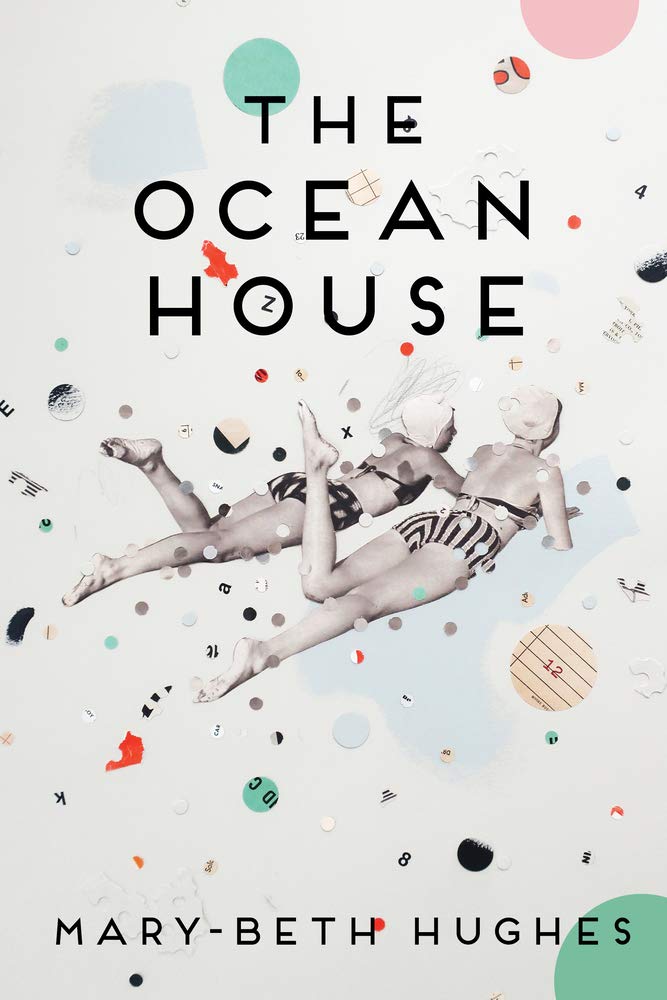
The Ocean House, by Mary-Beth Hughes

I'm something of a sucker for interconnected stories and this cover rocks. The publicity materials cite this as "an exquisite world of complicated family tales on the Jersey Shore," so I was all-in. Unfortunately, it lost me quickly. I'm not sure if it was me or the writing (though taking a quick peek at other ratings tells me it's not all me), but I did not connect with Hughes's prose at all. I love complicated family tales, so I would like to give this one another go, but I'm not burning to get to it.


THE THREE MRS. GREYS, by Shelly Ellis

Cool cover, author of color, fun premise: three women believe they are the only wife of wealthy businessman Cyrus Grey until he's shot and comatose in the hospital. I was expecting a thriller with a little soap (a little I can take), but this was a bit over the top in the drama department for me. I might have pushed through were it not for the staggering overuse of the exclamation point. Hot tip: USE THEM SPARINGLY. If at all. It felt like every line of dialogue had one and I just couldn't do it. I tapped out early. 


Friday, May 14, 2021

FRIENDS DON'T LET FRIENDS REVIEW THEIR BOOKS

I try not to review books written by friends. Which is a shame, not because anyone is missing out on what I think, but because my friends are fantastic writers and the one or two people who visit this space might become a reader of the work if they aren't already. But such reviewing is fraught with danger. How objective can one be? If you review one pal's book and not another's, does the non-reviewee take any message from that fact (spoiler alert: they should not, other than my own laziness)?


All this is preface to a big "However,..." I recently took a hiatus from "formal" reviewing, which means I am, for the first time in a loooong time, free to read whatever the hell I want, including titles that have been on my shelf for years (I like that I can blame some of this on reviewing, ha). Just my luck, new books from two of my favorite people recently published. The third has been waiting at the top of my stack since late last year and I was all kermit-flailing about reading it and sharing all three with you. Let's dig in.


TRICKY, by Josh Stallings


Josh has one of the more imposing presences and biggest hearts of anyone you'll ever meet, and he can write just about anything. He's penned three gritty Moses Maguire books, a 70s heist/caper, and a fantastic memoir. I'd been hearing great things about his latest, Tricky, and couldn't wait to dive in. It may be my favorite of a stellar bunch of titles. 

Full of heart, grit and important social issues, Tricky starts full bore, with LAPD  Homicide Detective Niels Madsen inserting himself in a standoff between two officers and a developmentally disabled man named Cisco. Cisco is about to take a bullet as he's standing over a dead body while holding a gun. Everyone is convinced Cisco killed his roommate, David, particularly when they learn he is a cunning killer who was in prison for murder by age fourteen. 


But is Cisco still that stone-cold assassin? Many think his current state is an act he's undertaken since suffering a beating several years ago. Niels isn't so sure, but the risk of being conned by Cisco is potentially disastrous. Stallings has written Tricky in honor of his intellectually disabled son and it's obvious Dylan made sure he got it right. A fun, intense, thoughtful read that takes off from the get-go, Tricky is a blast.


TWO IN THE HEAD, by Eric Beetner


When I crack the cover of one of Eric's books I know I'm in for a ride that will require a seatbelt, and Two in the Head (with a fun pun for a title) is no different. It begins with DEA Agent Samantha Whelan coming to after miraculously surviving a car bomb meant to take her out. In addition to two goons, she sees a somewhat familiar figure walking towards her. As it gets closer, she realizes it's none other than herself coming her way, murder in her eyes.


If you think you're goofy on the juice, you're not, it's just Eric being Eric and pushing the envelope every which way. Come to find out Samantha is not the straightest of DEA arrows and has been playing both sides, working a little here and there for powerful drug dealers Calder and Rizzo. Things started getting a little too sticky when Samantha became engaged to the DA trying to take Calder and Rizzo down. The car bomb was a sign she's become too big a liability.


This is a fun setup no matter how you slice it, but Eric takes it a few steps further (natch) and uses the "splitting" of Samantha's persona to amp up the fun and the action. Once Samantha split (into Samantha and Sam), so did the good and bad sides of her personality. Samantha can now do no wrong, not even swearing, breaking the speed limit or parking impolitely (HELL ON EARTH). The other Samantha, "Sam," is just the opposite and has not a shred of humanity left. It's a literal race between good and evil as the Sams try to save and/or kill those who oppose them. 


I'm not schmaltzy, but Two in the Head has one of the best proposal scenes ever. Along with clever chapter titles (for which I'm always a sucker), action, and interesting themes on what it means to be good, bad and shades of both, this one is two great kicks in the head. 


REVENGE OF THE WIDOW MALMON, edited by Kate and Dan Malmon


Several years ago, authors stood in long lines for hours for the chance to pen a short story about the death of the crime fiction community's beloved mensch Dan Malmon. The best slice-and-dicers were put together in an anthology edited by Dan and his wife Kate and Killing Malmon was born. The proceeds from the book were donated to the Multiple Sclerosis Society.


Not one to sit around and mourn her lesser half, Kate went on a rampage to avenge her murdered love, and Revenge of the Widow Malmon was born. The ton-of-fun collection grabbed me from the jump with the opening to Jordan Harper's Sing Her Song:


The old convertible sitting in the cop shop impound lot still has streaks of dried blood down the side of the door...So much of Dan left there for her to clean. 


Harper's entry is followed by a wide variety of offerings, including those from Jennifer Hillier, Sean Chercover, Nikki Dolson, S.A. Cosby and Joe Clifford, to name but a few. I hate to even put this in writing, but my favorite may be that of Ed Aymar.  In The Dead, Kate kills all the men in the world over 18 to avenge Dan and women create a better society, reshaping laws and actually taking care of each other. It sounds heavy, but it's also got great Magnum, P.I. humor. What could be better, death and great 80s television?


Again, all the profits benefit the Multiple Sclerosis Society, so even if you think Ed is weird and Dan refused to hug you last time you saw him, do this for Kate. 


Monday, May 3, 2021

EVERYTHING IS FINE :: Vince Granata

A version of this review previously appeared in Shelf Awareness and is republished here with permission.

Vince Granata was four when his parents brought triplets home from the hospital. As the family legend goes, thrilled to have siblings, Vince stuck his head in his father's open car window and declared, "This is the best day of my life." Granata was 27 when he got the call that his brother Tim had killed their mother.

Granata's heartbreaking memoir, Everything Is Fine, recounts the years leading up to Claudia Granata's death at her son's hands and the aftermath that left Vince, his siblings and his father with differing scars from the same horrific wound. It is the story of a warm, loving family, yet also one of American tragedy. Granata demonstrates how woefully inadequate mental health care and historically deadly clashes between law enforcement and the mentally ill left his mother fighting for her son's life, yet afraid to call authorities for help.

Granata deals with his traumas through the memoir, but also uses it to educate readers on a misunderstood disease process. Signs of Tim's schizophrenia began in high school, "on an atomic level, a single cell, something misfiring, an electron hitting the wrong synapse, a chemical imbalance slowly putrefying his brain." The progression to demonic delusions is harrowing in hindsight, but in order to inform readers about the terror of the disease, Granata had to "show... the horror it wrought" and the boy it swallowed. Painful on a multitude of levels, Granata's work is thought-provoking and important. It elegantly humanizes a man who has done the most inhumane thing to those he loves most. 

Saturday, May 1, 2021

LITTLE AND OFTEN :: Trent Preszler

A version of this review previously appeared in Shelf Awareness and is republished here with permission.

Trent Preszler, born and raised on a farm, longed to live in New York since watching The Muppets Take Manhattan in a 1986 Faith, S.Dak., theater. He made the dream a reality: he earned two degrees at Cornell and, then, as CEO of Bedell Cellars, created the merlot served at Barack Obama's inauguration. Yet his successes were haunted by his estranged father Leon's words, "You ain't never gonna be man enough." In Preszler's superb memoir, Little and Often, the improbable happens--the non-craftsman builds a canoe from scratch and makes peace with his demons. 

Disowned 14 years earlier, Preszler is stunned when his dad has nice words for him during a rare trip home. Leon dies shortly thereafter, oddly leaving Trent his toolbox. Recalling a fond memory of a time in a fishing boat, Preszler somewhat inadvisably decides to build a strip canoe, following directions from a decades-old paperback he discovers at the lumberyard.

The build begins about as well as expected as Preszler, whose friends think macramé might be more appropriate, rushes in and learns on the fly. But using his father's tools and discovering more about the churchgoing Vietnam veteran and championship rodeo rider helps Preszler understand his life's traumas. Readers learn along with Preszler as he works; he thoughtfully doles out historical details over the course of the boat's construction, as he reveals the family's background. Insightful and humorous, Preszler's memoir is a deep dive to find the father he longed for and the confidence to be his own man.

Tuesday, April 27, 2021

TWO-CENT TUESDAY

Below are a few somewhat brief $.02 opinions about books I've read or listened to recently but don't have time, inclination, or opportunity to review in full. Their appearance in this recurring piece generally has little to nothing to do with merit. Many of these books I enjoyed as much or more than those that got the full court press. I hope you'll consider one or two for your own TBR stack if they strike your fancy whether they struck mine or not.


BOOKS THAT BEAT MY PANDEMIC BRAIN

Winter Countsby David Heska Wanbli Weiden

Winter Counts is a knockout piece of crime fiction featuring a Native American protagonist written by a Native American author. Which is reason enough to pick this up, since Native authors are vastly under-represented and under-appreciated. Weiden's debut has been shortlisted for the Edgar Award for Best First Novel, and I wouldn't be surprised if he took home the prize. Set on the Rosebud Reservation in South Dakota, Winter Counts centers on local enforcer Virgil Wounded Horse and his efforts to combat a local drug issue and save a family member in the process. Fantastic stuff and I can't wait for more DHWW and Virgil.

Group, by Christie Tate

For whatever reason there has been a spate of therapy books in the non-fiction realm lately and I am here for it. Others I've read (and greatly enjoyed) were written from the psychologist/psychiatrist perspective, so this was a fresh take. Told by Christie Tate, it was a story I related to in many ways, as Tate was a top student in her law school yet plagued by sadness and thoughts of her own death. Her wonderful therapist, Dr. Rosen, semi-forces her to join a psychotherapy group, and the result is a fabulous and often hilarious read.

Dear Child, by Romy Hausmann

A nifty take on an abduction story, Dear Child begins with a young woman unconscious and hospitalized in Munich following a hit-and-run. With her is a small child, Hannah, who tells a fairly creepy story of their existence and calls the woman "mama." But is the woman her mother? What of the brother Hannah says they left behind to clean stains on the carpet? And is "mama" really Lena, a girl who went missing 13 years ago? Told from alternating perspectives, Dear Child is a super fun ride. 

Little Cruelties, by Liz Nugent

Liz Nugent rocks. And that's not a pun on Ted Nugent, because we all know he's a moronic dick. Little Cruelties is told from the perspectives of three brothers--William, Luke and Brian Drumm. They are all present at a funeral. The catch is that one of them is in the casket and you don't find out which one until the end. Nugent is masterful at setting forth their intertwined lives and intimacies, each with his own version of events, strengths and frailties. Full of mind games and psychological maneuverings, it's a fast-paced gem.


PANDEMIC-BRAIN VICTIMS

Where The Edge Is, by Grainne Murphy

Gosh this one started out great, and I think I will eventually go back to it. A road in Ireland subsides, trapping five people inside a bus. As the rescue goes forth, we begin to learn about those involved. I was transfixed. Then all of a sudden I wasn't. One section started getting deep into historical issues and my pandemic-riddled brain just wasn't in for it at the time. But I love the cover and the premise and the beginning, so I will give this one another go one day. 


Between Two Kingdoms, by Suleika Jaouad

Oh boy. I was really looking forward to this memoir, mostly for the roadtrip-with-dog that was to follow the author's devastating cancer diagnosis when she had just graduated from college and was on the precipice of a new love and dream career. I hated that I wasn't enjoying it. I kept plugging along, thinking I was being an asshole for judging this woman who was going through such hell. But then. An event relating to her dog. Huh. Maybe I'm not off-base. But I'll give her yet another benefit of the doubt. Then, NOPE. A second event with animals, this one I couldn't overlook, even when someone went through what she did. She's a self-absorbed jerk who spent most of the book proving it and in the end didn't really replace that sentiment with anything redeeming. Bummer. (Of course, your mileage  may vary.)


Saturday, April 24, 2021

THE FUTURE IS YOURS :: Dan Frey

A version of this review previously appeared in Shelf Awareness and is republished here with permission.


Dan Frey (The Retreat) does a bang-up job imagining a scenario in which computers can communicate with their future selves and the impact that could have on society on a variety of levels. Cleverly told entirely via documentation (e-mails, blog posts, texts, reports, etc.) to avoid spoilers,
The Future Is Yours
is an "opposites attract" tale of friendship set in the thought-provoking and cutthroat world of technology.


Ben Boyce, a confident connection-maker with a gift for wooing venture capitalists, and Adhvan "Adhi" Chaudry, an intellectual genius with woeful people skills, become best friends while rooming together at Stanford University. The story begins with an e-mail sent by Ben to Adhi from a year in the future--immediately proving Stanford whiffed by not backing Adhi's Ph.D. thesis proposing communication with the future using quantum computing.


The engrossing road from college to rolling out their product, a computer-type unit called The Future, is centered around the transcript of a 2021 congressional hearing where the legality of The Future is to be decided. Despite a subpoena, Adhi is mysteriously absent from the hearing. Frey ups the suspense by putting limitations on The Future: it can see only into a one-year future window, to a reality that cannot be altered.


Unsurprisingly, data from The Future becomes problematic. As Adhi struggles with morality issues, Ben drives passionately ahead, their friendship, relationships and the future of the world at risk. Frey's work as a screenwriter shines through in form and substance in this gripping work of science fiction

Friday, April 23, 2021

SPITE :: Simon McCarthy-Jones

A version of this review previously appeared in Shelf Awareness and has been republished here with permission.

A "strong" definition of the word spite, an act "where you harm another person and harm yourself in the process," does not leave much room for positivity. Yet the subtitle of Simon McCarthy-Jones's fascinating new work, Spite: The Upside of Your Dark Side, more than hints at how spite can be a constructive force. An associate professor of psychology and neuropsychology at Dublin's Trinity College, McCarthy-Jones has multiple degrees, papers and books to support his ideas about spite. That doesn't mean he declines the use of cinema's Terminator or Batman for occasional help explaining them.

Spite "runs deep," found in ancient myth and folklore, and most of us are familiar with its negative connotations. Yet if spite has no purpose since everyone loses, why was it not weeded out by natural selection long ago? McCarthy-Jones uses plain language, movies, humor and several economic "games" to "shine a light" on what he convincingly puts forth as an important tool for preventing injustice.

In the Ultimatum Game, player one is told player two in the room next door has $10 to share as they see fit. Player one can accept or reject player two's offer, but a rejection means both players get nothing. This seemingly simple game and its variations (the Dictator Game, the Joy of Destruction Game, etc.) are used ingeniously by McCarthy-Jones to explain both valid and improbable human behaviors, including voting against one's own best interests. Entertaining and illuminating, Spite explains how a society that depends on cooperation requires spite to thrive. 

Thursday, April 15, 2021

BROKEN HORSES :: Brandi Carlile

A version of this review previously appeared in Shelf Awareness and is republished here with permission.


Cross-genre musical artist Brandi Carlile seemed to burst on the scene following a multiple Grammy-winning evening in 2019. The most nominated woman at the 61st annual awards (six), Carlile blew audiences away with her Song of the Year performance, "The Joke," an anthem for those who struggle to fit into the world's divisive molds. Thanks to Carlile's intimate memoir, Broken Horses, the story of how the "overnight sensation" struggled and strived for years can be known beyond the fans who have followed her religiously even prior to her first studio album in 2005.


Carlile's childhood in Washington State was marked by alcoholism, poverty, religion, health problems, instability (14 different homes) and, as the first-born grandchild, her own "inflated sense of self-importance and burden of perceived responsibility." That said, her family was warm, close, musical and filled with characters that lay a good storytelling foundation. But it is Carlile's sense of self and her ability to be deeply vulnerable and introspective before an audience that allow her to plumb the depths of her upbringing and forge her trail to center stage.


A brilliant lyricist, Carlile adapts her gift to the long form without missing a beat. Her style is conversational, whether the topic is music, charity work, motherhood (Carlile and her wife have two daughters), LGBTQ+ rights, Barack Obama or Carlile's beloved "gay pen pal father figure," Elton John. Overflowing with thoughtfulness, wicked humor, photographs and song lyrics, Broken Horses is an epic sit around the campfire. 

Sunday, April 11, 2021

A MOST REMARKABLE CREATURE :: Jonathan Meiburg

A version of this review previously appeared in Shelf Awareness and is republished here with permission.

If a bird can be said to have inappropriately flown beneath the radar of public fascination, that is the caracara. Jonathan Meiburg's fabulously epic account, A Most Remarkable Creature, sets the record straight. Meiburg is frontman for the band Shearwater (named after a long-distance marine bird); in 1997, he received the Thomas J. Watson Fellowship, which awards a year's travel to remote communities, sparking his enchantment with islands, birds and natural history.  

In the falcon family, caracaras are unlike other birds of prey, who focus on hunting. Caracaras, innately curious and "disarmingly conscious," seek out interaction regardless of food. Calling a caracara a bird of prey, says Meiburg, "feels like calling the painters of the Italian Renaissance a group of unusually gifted apes." Caracaras fascinated Darwin, who wrote more about them than any other bird.

Caracaras will "pluck the cap from your head, tug at the zippers of your backpack, and meet your eye with a forthright, impish gaze." This "earnest, playful quality" is what spurred Meiburg's research, yet A Most Remarkable Creature is much more than a scientific profile. It is a grand intellectual adventure involving dinosaurs, DNA, naturalists, exploration and survival. Meiburg is a gifted storyteller, and one can't help but fall under the same spell he did, daydreaming about "keeping a striated caracara in my apartment. It would be the world's most exasperating roommate, but watching it build a nest of shredded T-shirts, LP jackets, and guitar strings in my bookshelf might be worth it."

Saturday, April 10, 2021

RAFT OF STARS :: Andrew J. Graff

 A version of this review previously appeared in Shelf Awareness and is republished here with permission.


Andrew J. Graff's debut, Raft of Stars, is a magnificent saga of friendship, loss and heroism, wrapped in the fallout of war and action that recalls adventure stories of old. In 1994 Claypot, Wis., 10-year-old best friends Fischer "Fish" Branson and Dale "Bread" Breadwin tear around town on their Huffys and roam the Northwoods, exploring and escaping their respective sorrows. Fish is mourning his military father's death, which precipitates his summer visits to Claypot, to his maternal grandfather, Teddy Branson, widower and Korean war veteran. Bread's father is an abusive drunk they avoid at all costs.


At the local gas mart, Tiffany works the counter, staving off homelessness, bantering with the locals and trying to catch the attention of Sheriff Cal. Cal is new to town, up from Houston where his confrontation with a violent parolee made a fresh start necessary. After Fish shoots Bread's father to stop another beating, the boys pack supplies, leave a note for Teddy and run away to build a raft and live off the land. The life-battered locals join with Fish's stalwart mother, Miranda, in a frantic search for the boys in the Wisconsin wilderness.


As the pairs (Fish and Bread, Teddy and Cal, Tiffany and Miranda) converge at the perilous gorge rapids the boys don't know exist, they learn about themselves, each other and the things that are most important. Graff's nature writing is absorbing, and his characters generate a yearning to know them. Raft of Stars is a quest story full of heart and humor. 

Monday, March 22, 2021

THE BABYSITTER :: Liza Rodman

A version of this review previously appeared in Shelf Awareness and is republished here with permission.


It was 2005 when Liza Rodman finally recognized the previously unidentifiable man from her long-recurring nightmares: Tony Costa, a local who often watched Liza and her sister during their summers in Provincetown, Mass. Liza's mother, a young divorcée, spent "most of her free time closing down the various bars and dance clubs with her own revolving door of suitors." She was cruel to Liza, who found solace hanging out with Tony, handyman at their motel and "one of the few kind and gentle adults in [her] life during those turbulent years." Rodman was 10 in 1969, when Tony disappeared. She never knew why, but was about to find out.


When asked what she remembered about Tony, Rodman's mother calmly replied, "I remember he turned out to be a serial killer." A shocked Rodman attempted to confirm they were speaking about the same man and her mother clarified: "Oh, for Christ's sake... don't be so dramatic. He wasn't your babysitter.... He was the handyman." Particularly telling of Rodman's sorrowful childhood: "Yeah, so what.... He didn't kill you, did he?"


A half century after Costa brutally killed several young women (when 1960s free love and ubiquitous runaways made "disappearing" someone seemingly easy), Rodman teams up with author friend Jennifer Jordan for The Babysitter. A haunting account--part memoir, part investigative journalism--of Rodman's childhood and its chilling connection with the Cape Cod Killer, The Babysitter is the astounding story of a vulnerable young girl and the consolation she found with a man who preyed on women.

Sunday, March 21, 2021

THE SALT FIELDS :: Stacy D. Flood

A version of this review previously appeared in Shelf Awareness and is republished here with permission.


In Stacy D. Flood's gorgeous novella, Minister Peters boards a train in South Carolina in 1947, laboring under the burdens of very personal loss and the generational damage to a Black man from the South. Minister was a single father after a killing took his wife (in "the age when the murder of a black woman didn't warrant the pen, ink, or gasoline that it would take to investigate"). Now, after losing his daughter also, Minister departs for the promise of the North and an escape from his ghosts.


The Salt Fields puts Minister at a crossroad, with little left to breathe life into him and nothing to lose. He's seated on a train with three strangers, and the dynamic flows from there. Flood packs generations into a novella not much more than 100 pages long, with language cradling the horrific thorns of the past. If prose about lynchings and whippings could ever hold beauty, Flood accomplishes it. Words are never wasted in this compact work, and Flood is proficient at painting the piece with few strokes. Sometimes this occurs on a small scale, with a line or two (e.g., the action in a club is "a long kiss between everyone in the room."), but he's equally adept regarding societal issues such as racism and sexism. In a short yet significant description, the whites-only entrance to the train station is freshly painted with Romanesque pillars, the Black entrance chipped paint over old pine. Yet both lead to a common platform where everyone awaits the same train to somewhere else.

Friday, March 12, 2021

OSLO, MAINE :: Marcia Butler

A version of this review previously appeared in Shelf Awareness and is republished here with permission.


The intense and vivid ensnaring of a pregnant moose sets in motion a chain of events that highlights Marcia Butler's shining character work in Oslo, Maine. Relationships are at the forefront in a town where news travels swiftly and secrets are hard kept. Husbands and wives, parents and children, neighbors and friends intertwine with the doomed moose, one of the novel's briefest but most poignant narrators.


Twelve-year-old Pierre Roy suffers severe memory loss following an encounter with the trapped moose. His injury puts additional stress on his parents, Claude and Celine, who now "fling synonyms at each other" over what kind of boy Pierre is. Man's man Claude, already eaten alive by Pierre's disturbing love of books ("They'd abducted his son with stealth and breathtaking speed from the day he'd started kindergarten"), becomes more despondent when Pierre finds solace in violin lessons and the crevasse between Claude and Celine widens.  


Neighbors Sandra and Jim, professional musicians, have issues and secrets of their own. Sandra is not only teaching Pierre but doing much of the housework while at Pierre's since Celine is adrift in a haze of drugs. The more Sandra helps, the closer things come to spinning out of everyone's control. Butler (Pickle's Progress) writes beautifully and with depth, each character mined for internal gems. Story is secondary, and while some plot arcs are dropped and the rest are tied up a bit too abruptly in an epilogue, the personalities that occupy Oslo, Maine are sufficiently intriguing to buoy this peculiarly engrossing tale. 

Saturday, March 6, 2021

WE OWN THIS CITY :: Justin Fenton

A version of this review previously appeared in Shelf Awareness and is republished here with permission.


Justin Fenton, Pulitzer Prize-nominated crime and police accountability reporter for the Baltimore Sun, covered protests following Freddie Gray's 2015 death in police custody. Gray, a 25-year-old Black man, was arrested though he had committed no crime, and his murder was an indicator of a nauseating pattern of police malfeasance in Baltimore. We Own This City is Fenton's explosive recounting of years of cover-ups and lies by hard-charging officers handpicked to combat poor crime statistics by targeting violent repeat offenders. A blind eye was turned to these "knockers," whose expanded independence was abused in the most abhorrent of ways, further damaging an already drug-and-violence-weary city.


Authorities struggled to reduce violent crime, leading to desperation and breakdown of discipline that allowed officers to run amok. "The message from up on high was clear. Do whatever it took to stem the tide of violence. Whatever. It. Took." Some officers carried this edict to incredulous extremes, stopping and searching without justification, planting evidence, searching homes, and seizing money and drugs that they would then sell back into the community they were sworn to protect. Perhaps none were more egregious than Sergeant Wayne Jenkins.


Fenton zeroes in on hard-driver Jenkins and the Gun Trace Task Force, meticulously laying out the years they ran roughshod, garnering acclaim for results stemming from their own misdeeds. Tracking Jenkins's history and the FBI investigation into the GTTF, Fenton details the lives ruined and damage caused by both under- and over-policing of Black communities. For anyone who fails to understand why Freddie Gray ran, the Wayne Jenkinses of the world provide a life-or-death rationale. 

About Malcolm Avenue Review

I was lucky enough to be born and raised in a nifty, oak-shaded ranch house on Malcolm Avenue, a wide-laned residential street with little through traffic, located amid the foothills of Northern California. It was on that street and in that house I learned most of my adolescent life lessons, and many grown-up ones to boot. Malcolm Avenue was "home" for more than thirty years.

It was on Malcolm Avenue, through and with my family and the other families that made up our neighborhood of characters, that I first learned about and gained an appreciation for the things I continue to love the most to this day: music, animals, photography, sports, television/movies and, of course, books.

I owe a debt of gratitude to that life on Malcolm Avenue. It gave me a sense of community and friendship, support and adventure. For better and worse, life on that street likely had the biggest impact on the person I've become. So this blog, and the things I write here, are all, at their base level, a little bit of a love letter to Malcolm Avenue.

Labels

  © Blogger templates Newspaper by Ourblogtemplates.com 2008

Back to TOP